Quick Slant: SNF - To Awake a Sleeping Giant

Mat Irby’s Quick Slant
Ben Johnson nodded at Dan Campbell, confirming it was time, and Campbell nodded back. Soon, the faint sounds of whistles and clapping were background, while Johnson was alone in his office, a charcoal-gray sky brewing off the Detroit River outside, staring into the blue light of a laptop at a man with shared career DNA.
The interview didn’t start with dollars. It didn’t begin with RPOs. It didn’t open with generic thesis questions about leadership or even small talk about the cold front rolling through the Midwest. Instead, Johnson and Ryan Poles talked about a small, windowless office at Boston College.
Before Poles became the Bears’ GM, and before Johnson was Detroit’s OC and the most coveted head-coaching candidate in years, both men had occupied that same cinder-block box as graduate assistants, though not at the same time. Poles was there in 2008, then left; Johnson was the next one through. And so, they spent the first twenty minutes of one of the most consequential interviews in Bears history laughing about bad coffee in a distant break room and Muzak in a far-off lobby.
By then, in Johnson’s mind, the conclusion was foregone; he had already anticipated taking the job, where an intersection of storied history and the blank canvas of a generational QB prospect was too perfect. But already, he and his new boss felt like old friends tuned up for regular Saturday barbecues and double dates to the theater.
Johnson had already sent a quiet no to the circus in East Rutherford. He’d ignored the blank checks from Las Vegas. He wasn’t looking for the highest bidder. He was looking for a sleeping giant he could awaken.
When Johnson finally walked through the doors of Halas Hall on January 21, he didn’t detour to the trophy case or the auditorium. He went straight to the equipment room, running his hand across the navy-and-orange fabric of a hoodie stitched with his initials. The ghosts of 1985 were still there, but for the first time in a generation, they felt less like hauntings and more like ancestors.
He pulled his phone from his pocket and sent a four-word text to QB Caleb Williams: Let’s go to work.
As Johnson was preparing to take metaphorical power tools to the culture of a long-rudderless franchise, roughly 2,000 miles west, a man he is often compared to was nursing another headache.
It’s hard to believe it’s been nearly nine years. In the winter of 2017, Kyle Shanahan was the Ben Johnson of another moment. It took time to take hold, but by 2019, it was undeniable: Shanahan was among the game’s sharpest offensive minds. That truth has been reinforced repeatedly since, even as critics fixate on fourth-quarter collapses and lost Super Bowls. Inside the league, the view is different. Shanahan isn’t defined by what slipped away so much as by what he built in the first place. Without him, most insiders believe, the 49ers wouldn’t be lamenting Super Bowls or NFC title losses. They wouldn’t be there at all.
But ask Andy Reid, or ask Dan Campbell—not in some presser where they’re pressed to take the fall, but over a cup of coffee with no cameras around. Sometimes, too much adversity piles up on itself, and there’s nothing to do but fall apart under the crushing weight of it. There was a time when it seemed this would be the 2025 49ers’ story.
Before the season, WR Brandon Aiyuk was placed on PUP; it wasn’t clear at the time, but Shanahan may have known he’d played his last game in 49ers crimson and gold. In Week 1, QB Brock Purdy and TE George Kittle suffered significant injuries. The following week, two offensive guards went down. Next came DE Nick Bosa, who tore his ACL a week later. Finally, on October 11, the 49ers lost All-Pro LB Fred Warner to a season-ending injury.
The sheer volume of water the 49ers took on should have sunk the boat, and the broader record would have offered sufficient cause to exonerate the coaches of all wrongdoing.
Shanahan’s 49ers have been here before, after all—in 2018, when injuries dragged them to 4-12, and again in 2020, when the MetLife Massacre set them on course for a 6-10 finish. To some degree, it came at the worst time for the 2021 team, who lost both QBs early in the NFC Championship and had choose between running Purdy out there, his arm held on by uncured glue, or dust off the Naval Academy playbook for Christian McCaffrey to lead some flex option. This year’s losses are pretty comparable. Remarkably, this time, the boat hasn’t sunk at all.
Instead, the 49ers have hung around in the league’s toughest division, still alive in the final act, playing the Bears in a game that could determine the first-round bye. And though neither man would ever say he cares one way or another, it may well decide this year’s coach of the year. Eventually, circumstance demands evidence; all of it, finally, resolves in a game.
Bears
Implied Team Total: 24.75
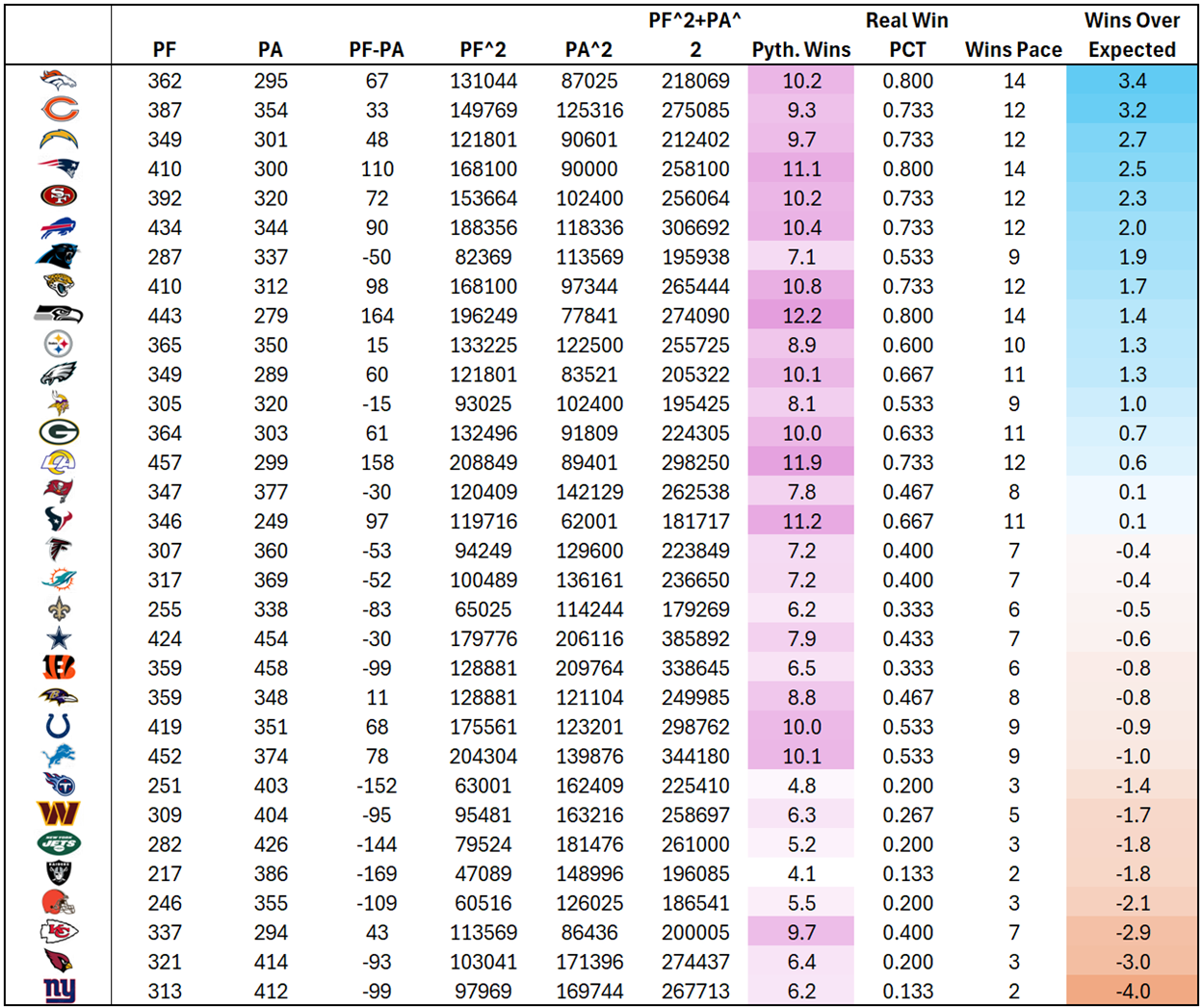
The Bears are already the NFC North champions. They and the Niners are both outstanding teams; they are also both overachieving, according to Pythagorean expected wins, which puts San Francisco at 2.3 wins over expected and Chicago at 3.2 wins over expected.
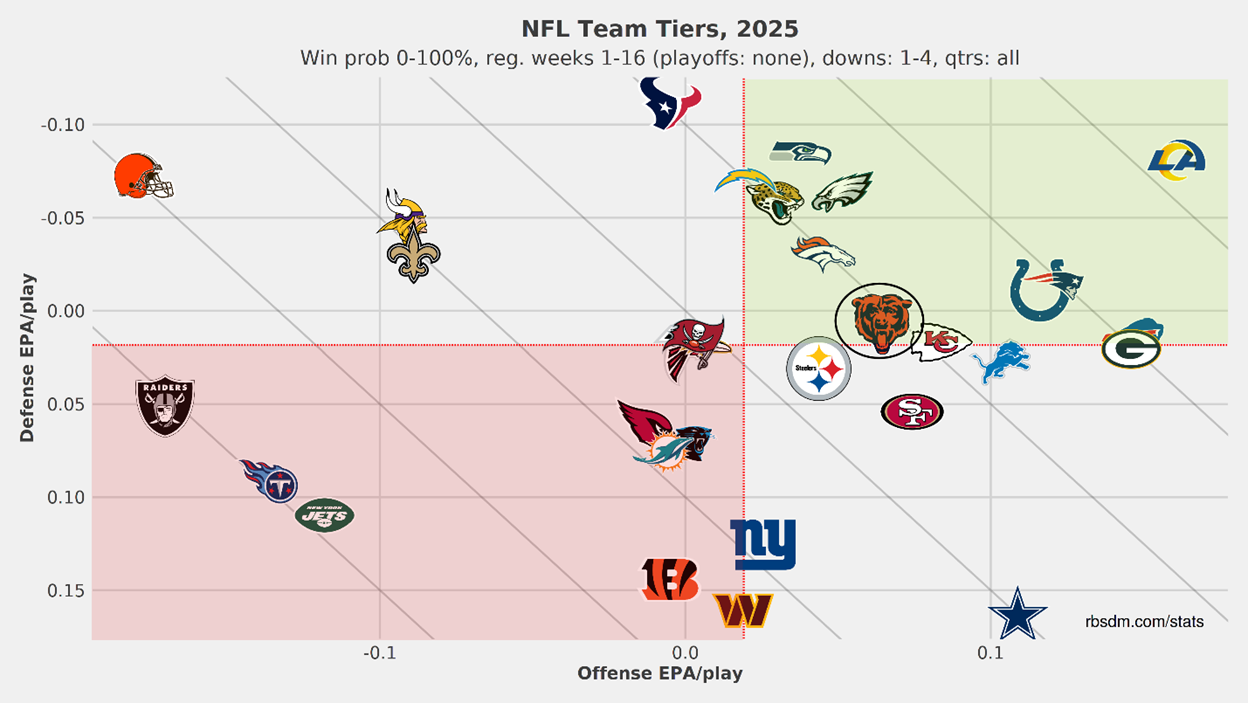
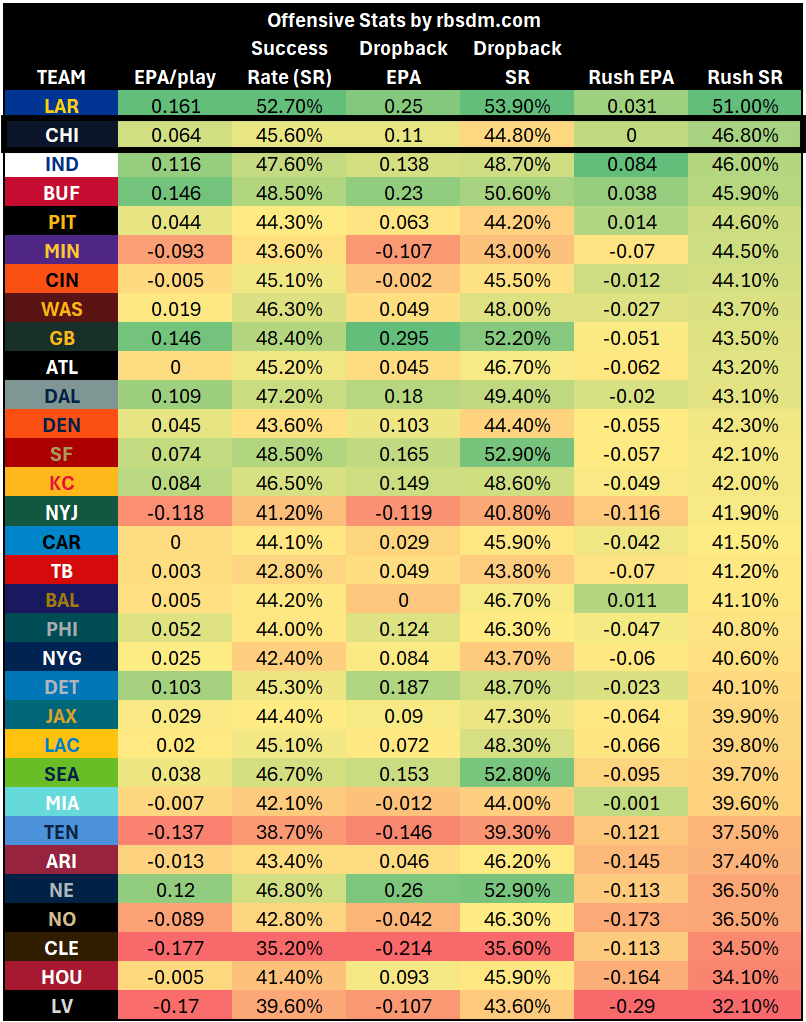
Chicago is well above average in offensive EPA and just above average in defensive EPA allowed.
The Bears’ offense is above average in both dropback EPA and rush EPA.
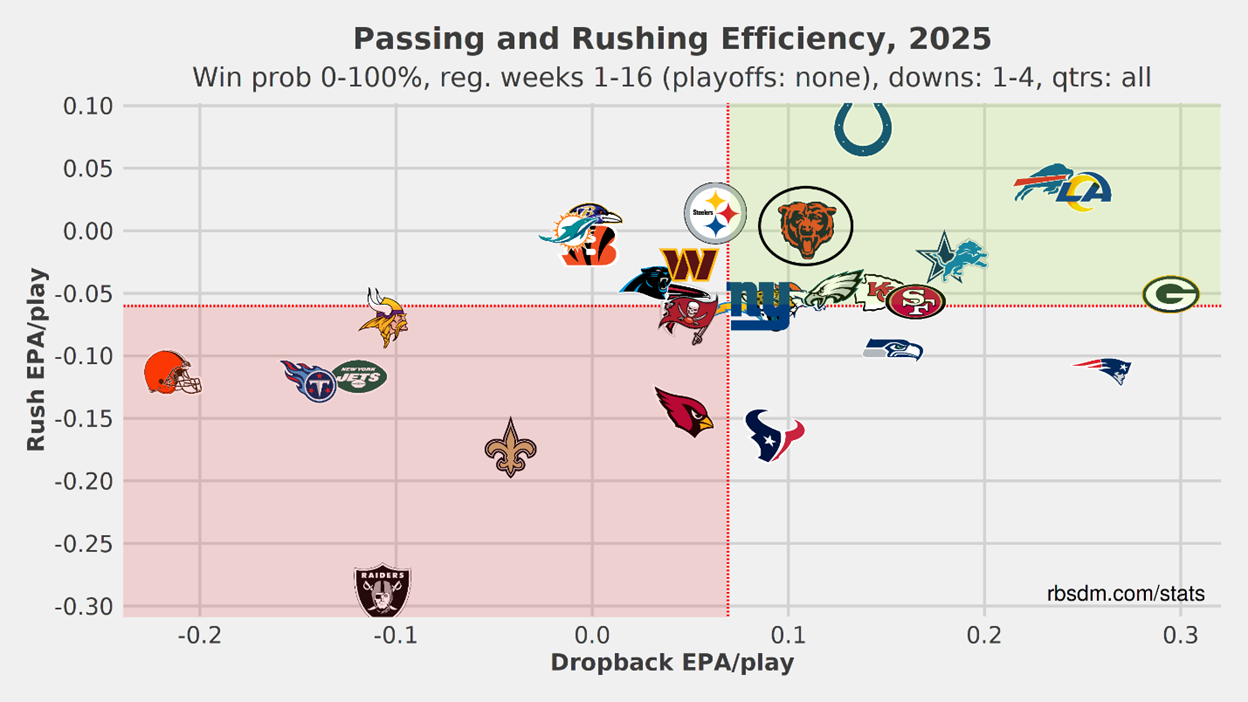
The Bears rank 10th in offensive EPA per play and 11th in offensive success rate. They rank 12th in offensive EPA on dropbacks and 22nd in offensive success rate on dropbacks.
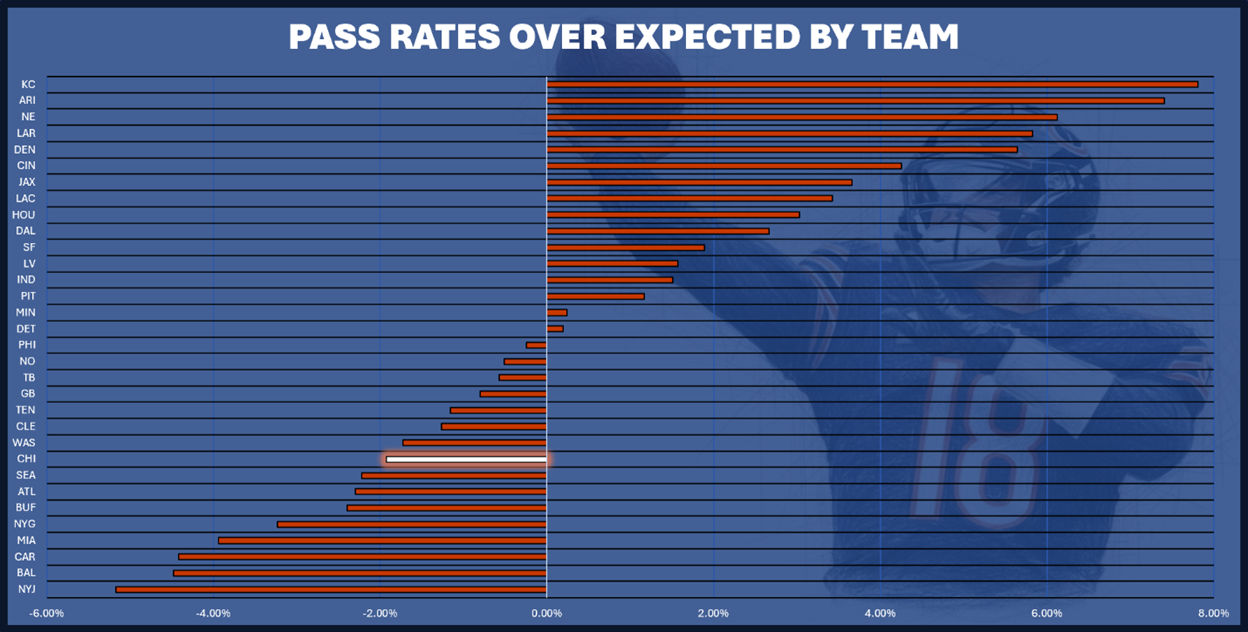
The Bears average 26.7 seconds to snap (T-12th) and have a pass rate of 54% (T-24th). Their pass rate over expected (PROE) is -1.92% (24th). They generate 68 plays per 60 minutes (T-2nd)—36 passes and 31 runs.
Williams has dropped back 556 times (8th), converting those into 493 attempts (7th). One of the most significant areas of improvement for Williams from Year 1 to Year 2 has been his handling of pressure. His pressure-to-sack rate has dropped from 28.2% (43rd) to 11.7% (5th), reducing his sacks by 66.2% thus far.
Williams has a decent rushing platform. This year, he’s had 71 rushing attempts (8th) for 369 yards (8th) and three TDs (11th). This gives Williams both a safer floor and a greater ceiling.
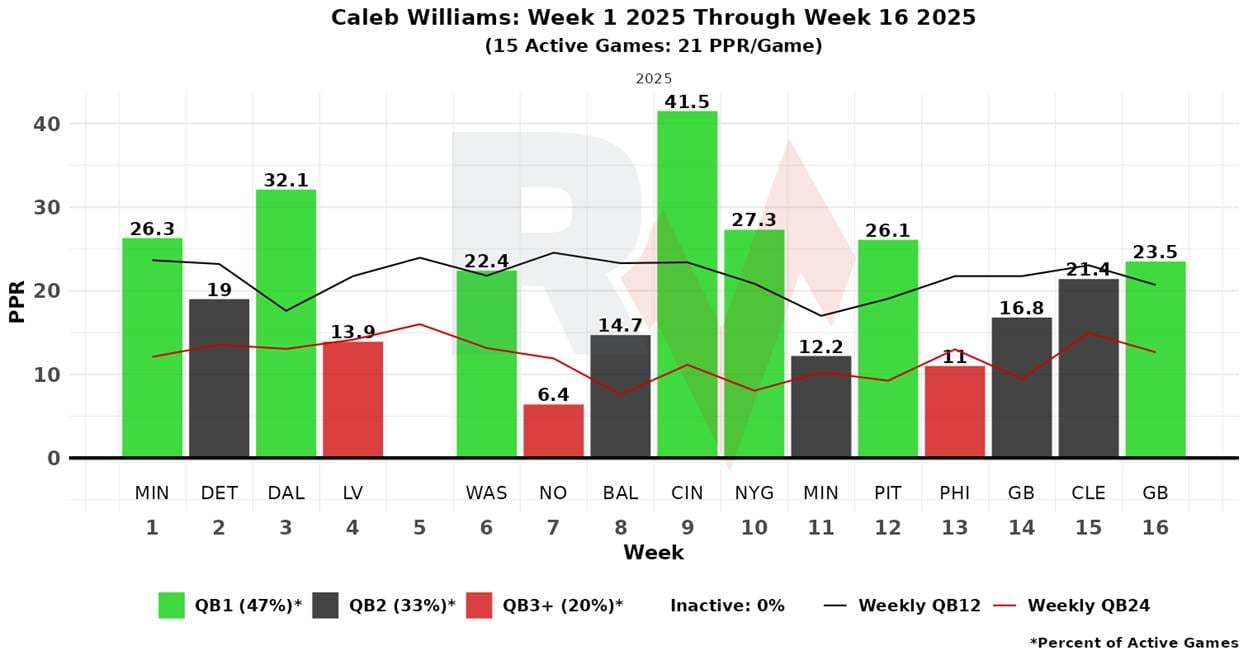
Williams has been a QB1 seven times in 16 weeks, finishing outside of the top 24 three times. He is the QB9 in fantasy points per game.
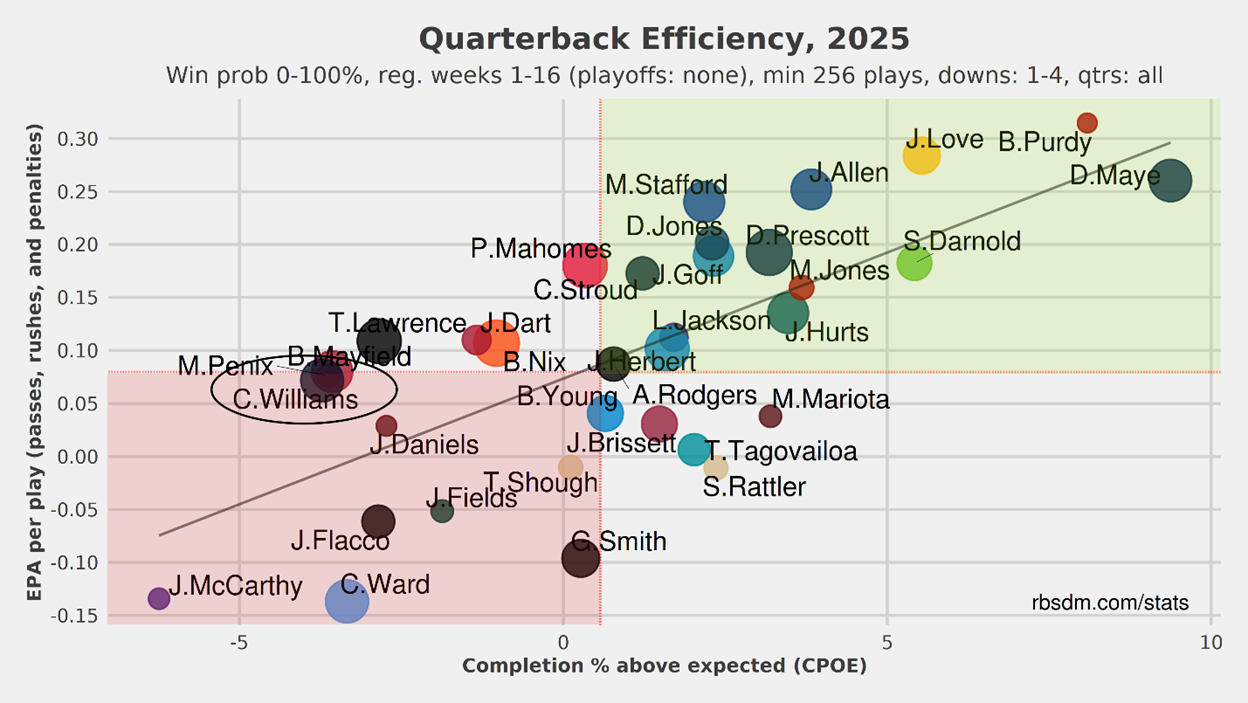
Williams still has his share of struggles as a pure passer. His dropback EPA is about average, but his CPOE is well below average.
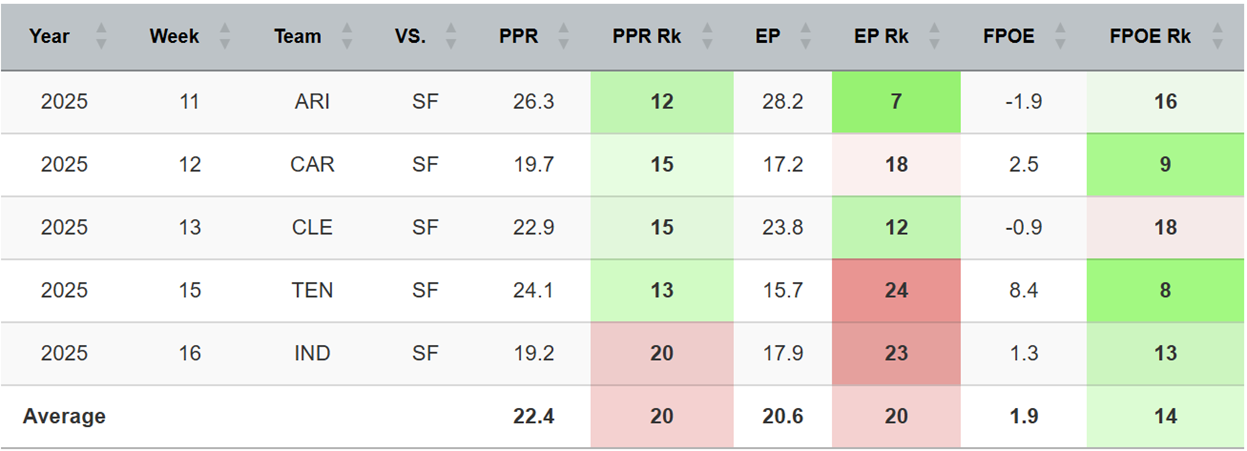
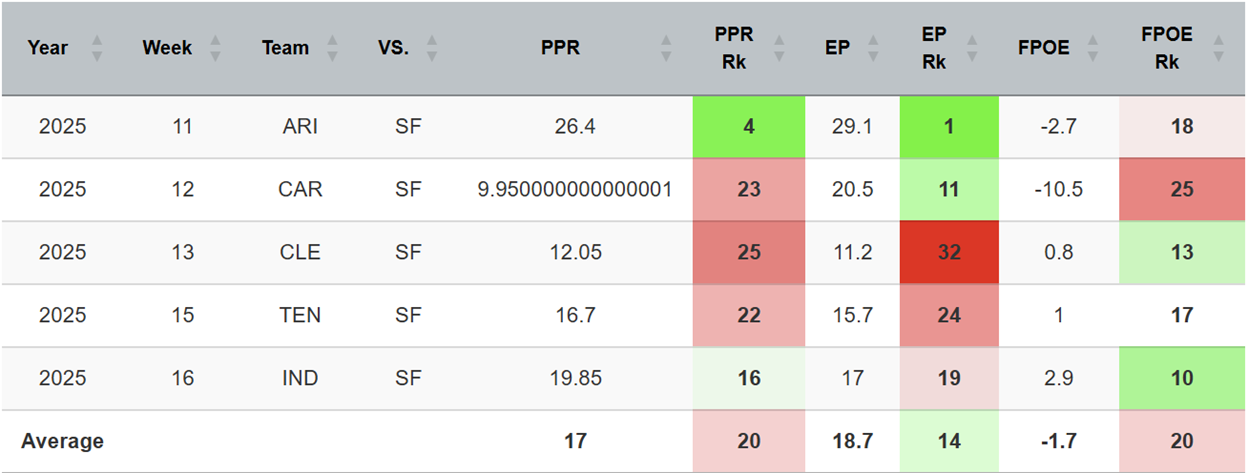
The 49ers have been pretty stingy to QBs of late, holding them to the 20th-most fantasy points against over their last five games.
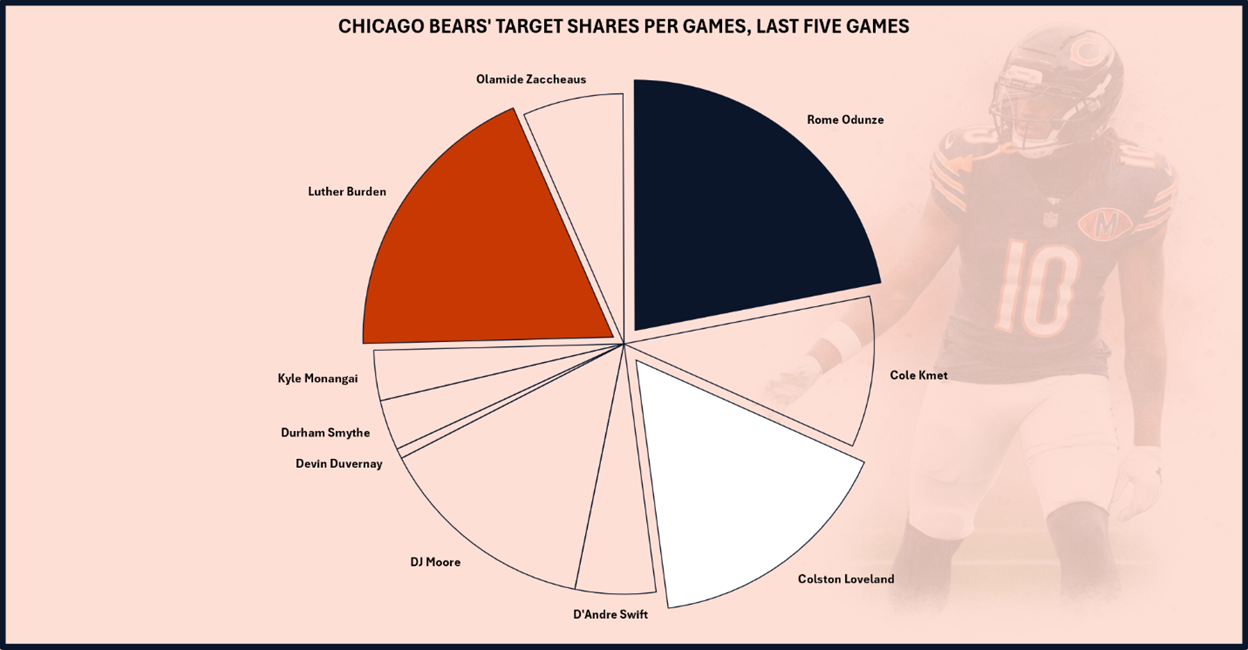
The Bears have three pass-catchers with at least a 15% target share per game rate in their last five games: WRs Rome Odunze (20.4%) and Luther Burden (17.5%), and TE Colston Loveland (15.1%).
Odunze is out this week. He will miss his fourth straight game with a stress fracture. There is optimism that he will be back for the playoffs.
Since Odunze has been out, the Bears have used more 12- and 13-personnel. Since Week 14, the Bears have increased their 12 personnel usage to 34.2%, up from a season average of 21.5%. In the last two games—specifically during the Week 16 win against Green Bay, where both Odunze and Luther Burden III were out—the Bears utilized 13 personnel on 12.4% of snaps. This is nearly triple their early-season rate (4.5%). Conversely, their 11 personnel rate has plummeted from a league-high 68% in the first half of the season to just 51% over the last three weeks.
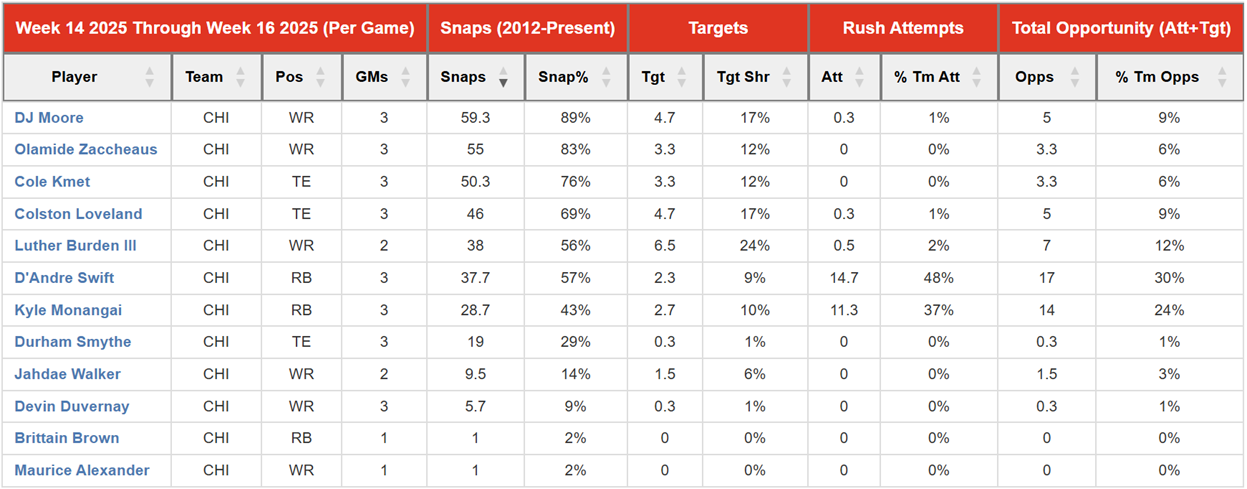
Here is a per-game personnel breakdown from RotoViz. The data shows a wide target allotment, with Burden drawing a 24% rate (RotoViz and PFF track targets differently, so target rates vary from site-to-site), which leads the team despite just a 56% snap share.
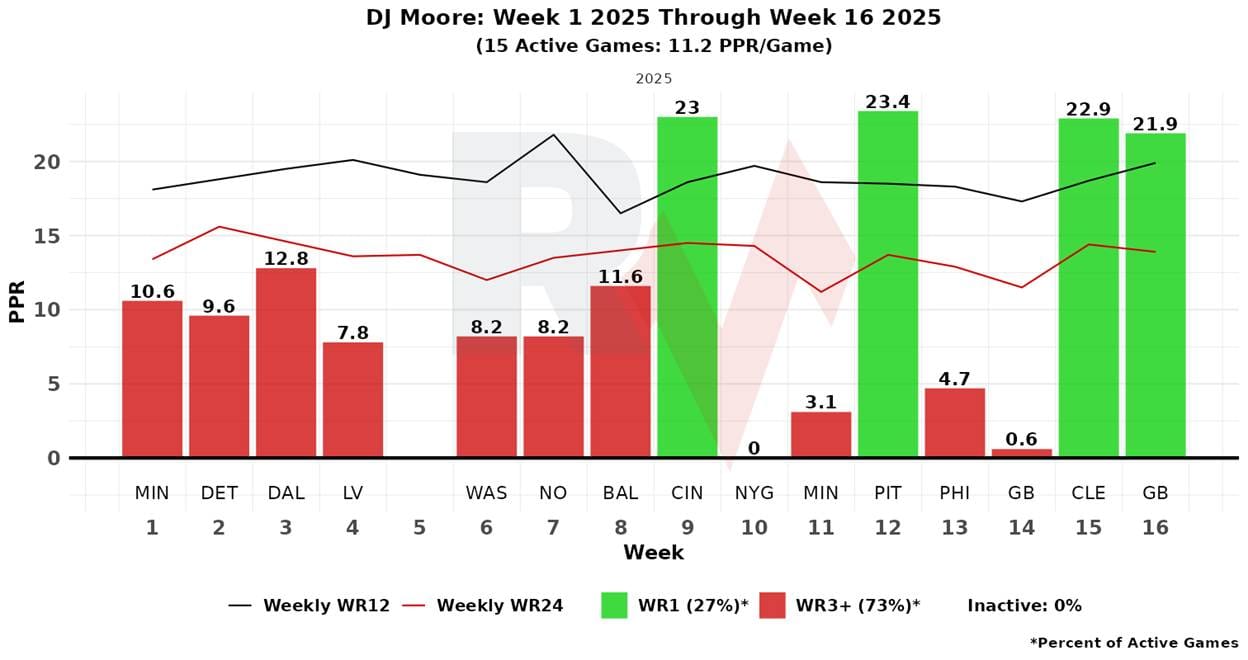
WR D.J. Moore has led the Bears in snap share at 89%, and he’s posted back-to-back WR1 weeks. In fact, all four of his top-12 finishes this season have come over the last eight weeks. He’s very boom/bust, the flip side of each 20–25 PPR-point eruption being a sub-5 PPR-point dud in the other four games.
Burden is the target share-per-game leader in that span. He has had more usable floor than Moore, but he has lacked his upside. He missed last week due to an ankle injury but will return this week.
Burden had the highest slot rate of any Bears’ pass-catcher in Weeks 14 and 15 (34.1%), but played more out wide (65.9%). Ultimately, he’s bouncing in and out of the lineup, and back and forth outside, but the Bears are, again, using a lot more two-TE sets.
His usage, however, has been Rashee Rice-ish, with a 7.7 aDOT in those two games, and a 7.9 YAC per reception. There are a lot of indicators that the Bears are prioritizing getting him the ball, foremost among them that he has 10 first-read targets in those two games, for a first-read target percentage of 29.4%.
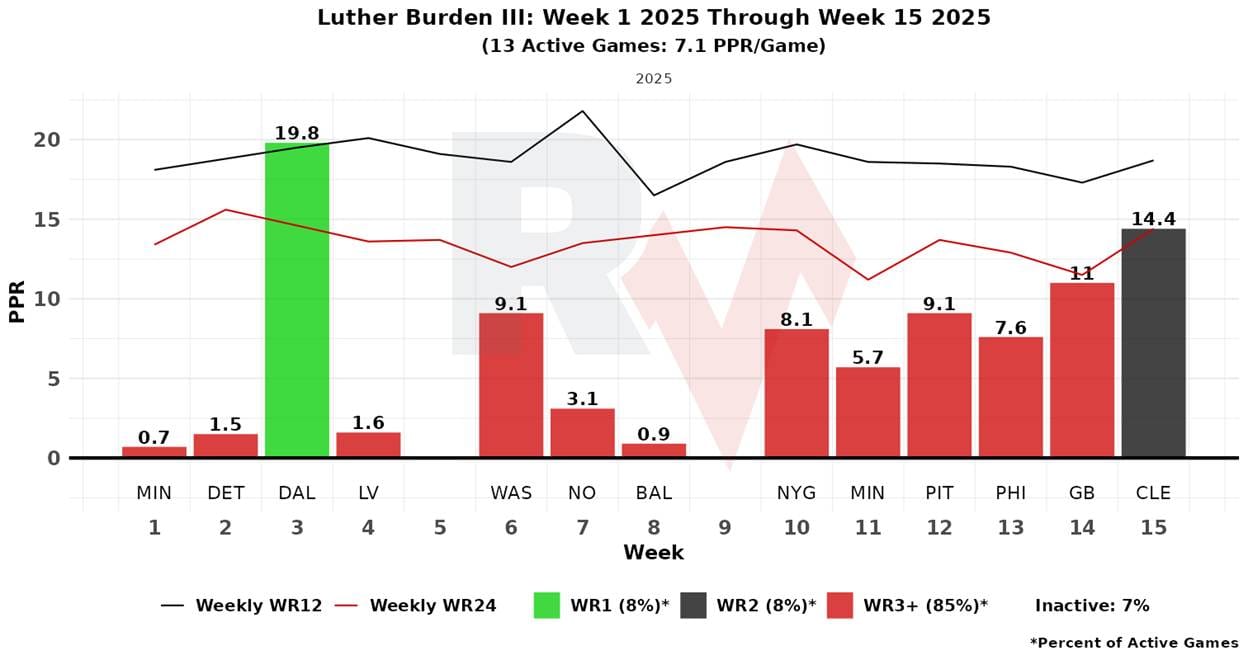
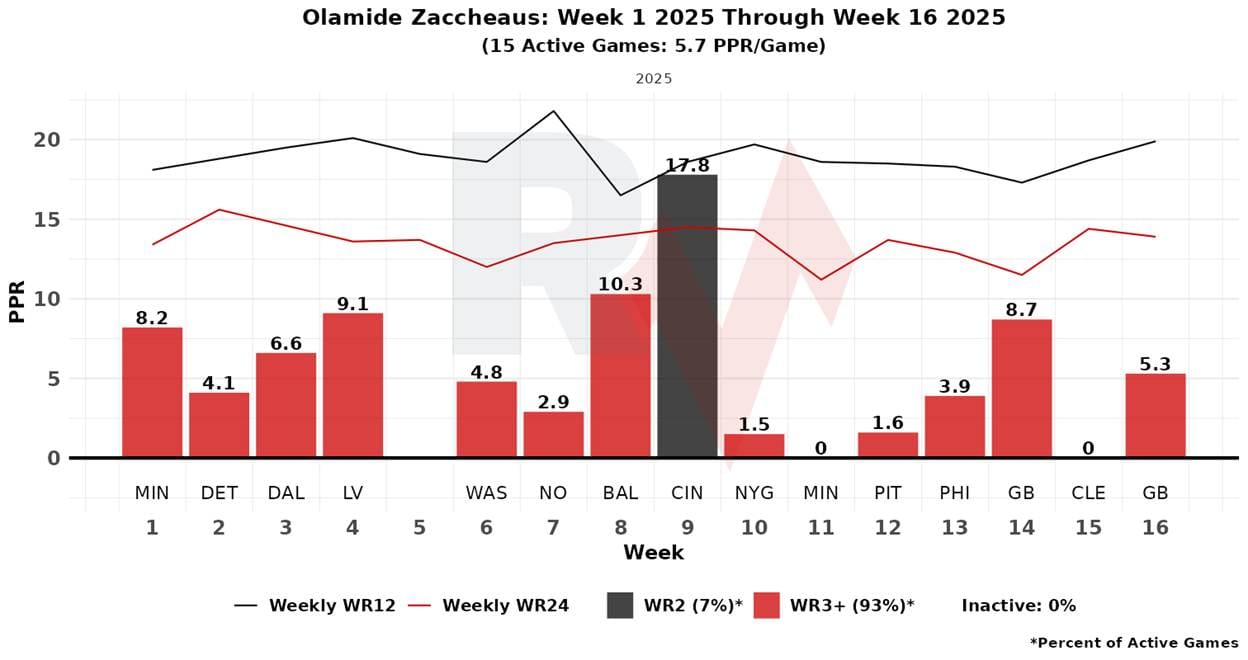
WR Olamide Zaccheaus had a superior snap share and route rate in Weeks 14 and 15, when both he and Burden played. He has not won meaningful targets, however, so he posted single-digit PPR points in each game, as he’s done every week since Week 9.
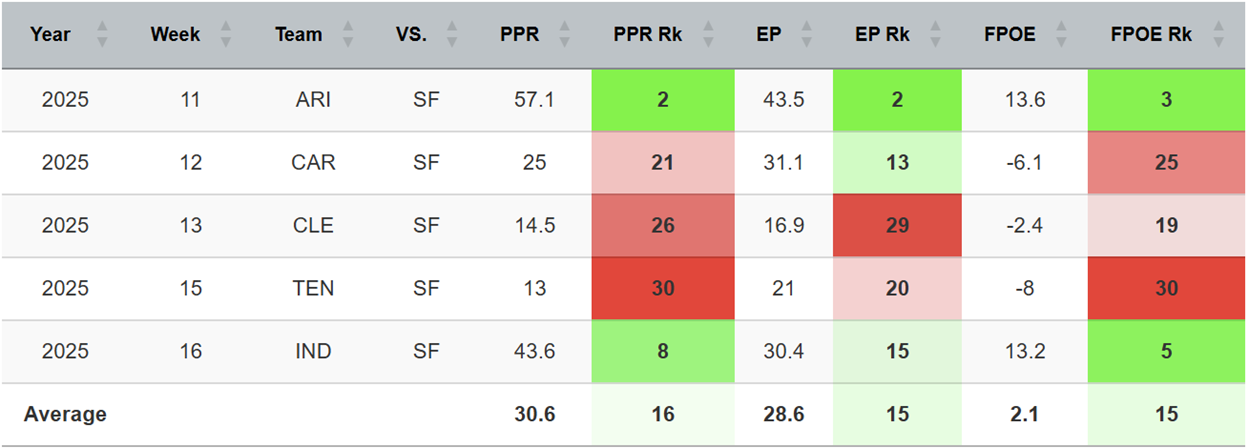
The 49ers have held WRs to 8th in PPR points over their last five games.
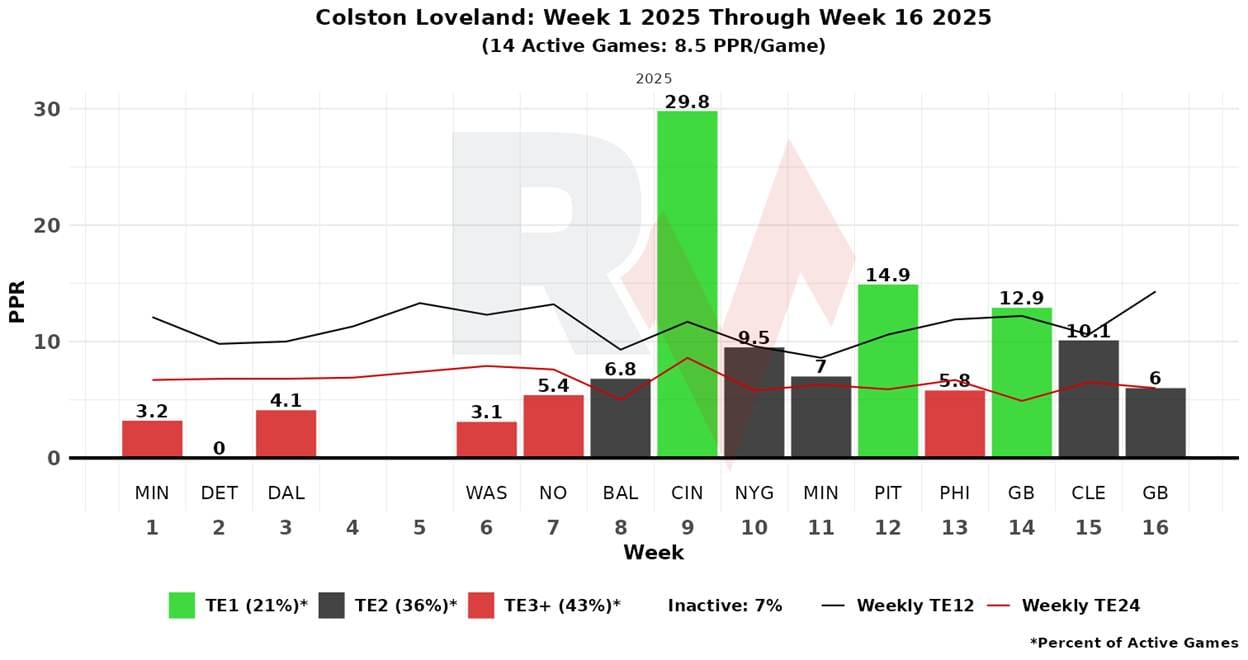
The Bears have played TE Cole Kmet on more snaps than TE Colston Loveland, but Loveland has been the superior target earner. Loveland has been a TE1 three times, including a spike week in Week 9 against Cincinnati. Since Odunze has been out, he’s been at the TE1/TE2 borderline twice and the TE2/TE3 line once.
Kmet has not dropped entirely out of the picture, although throughout a rough patch in the middle of the season, he demonstrated he can have a steady, sustained downside. At least until Odunze returns and the Bears go back to using more 11-personnel, he’s a streaming option in the right matchup.
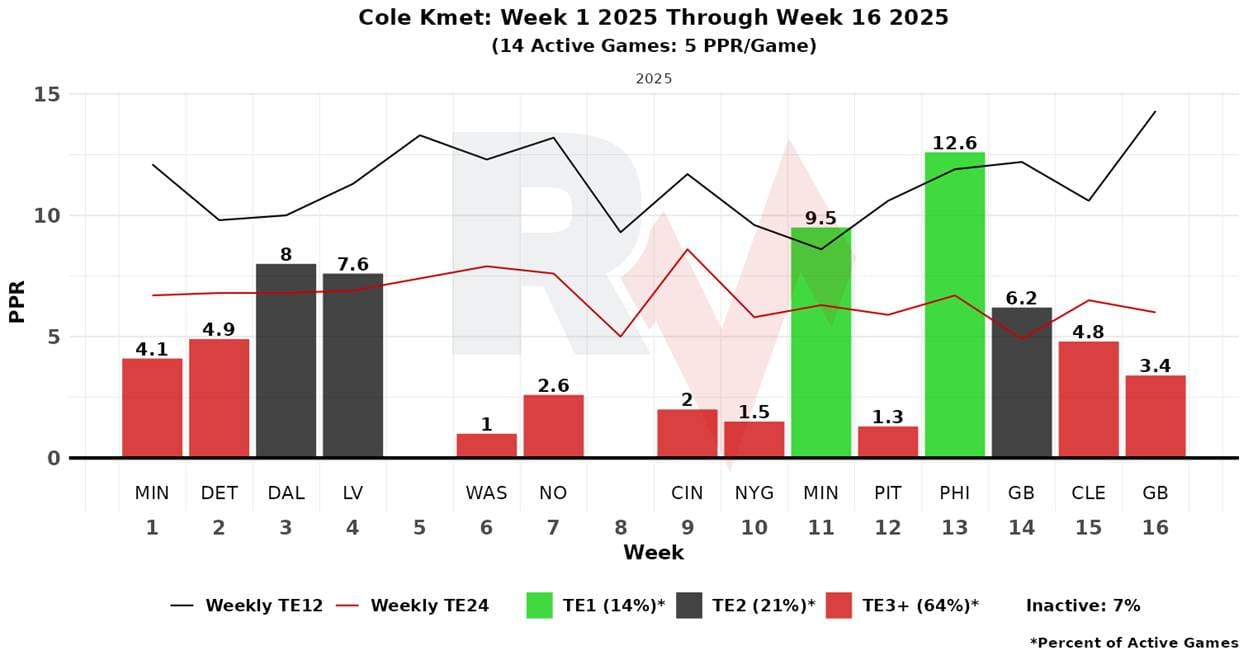
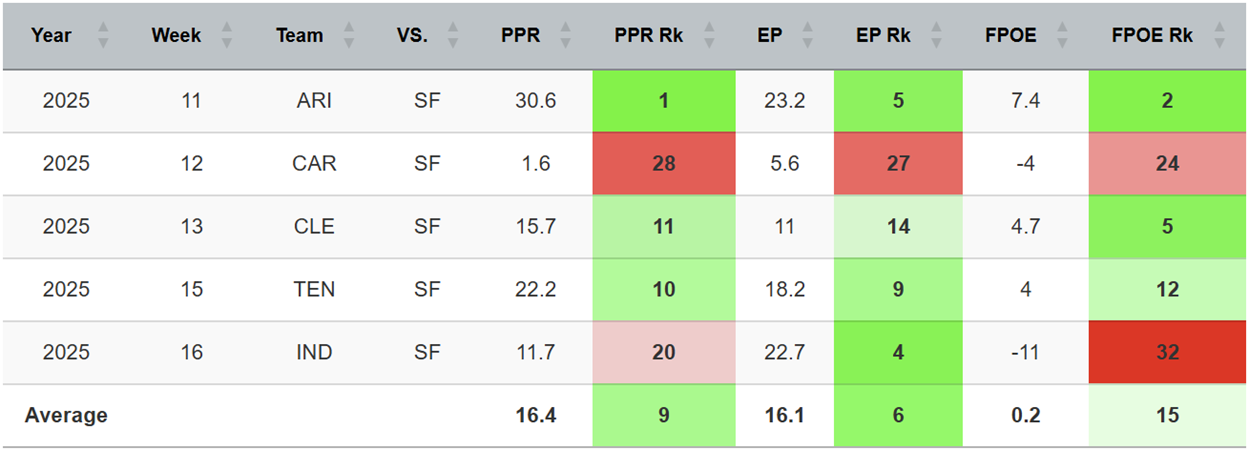
San Francisco is a winnable matchup. They’ve allowed the ninth-most fantasy points to TEs in their last five games.
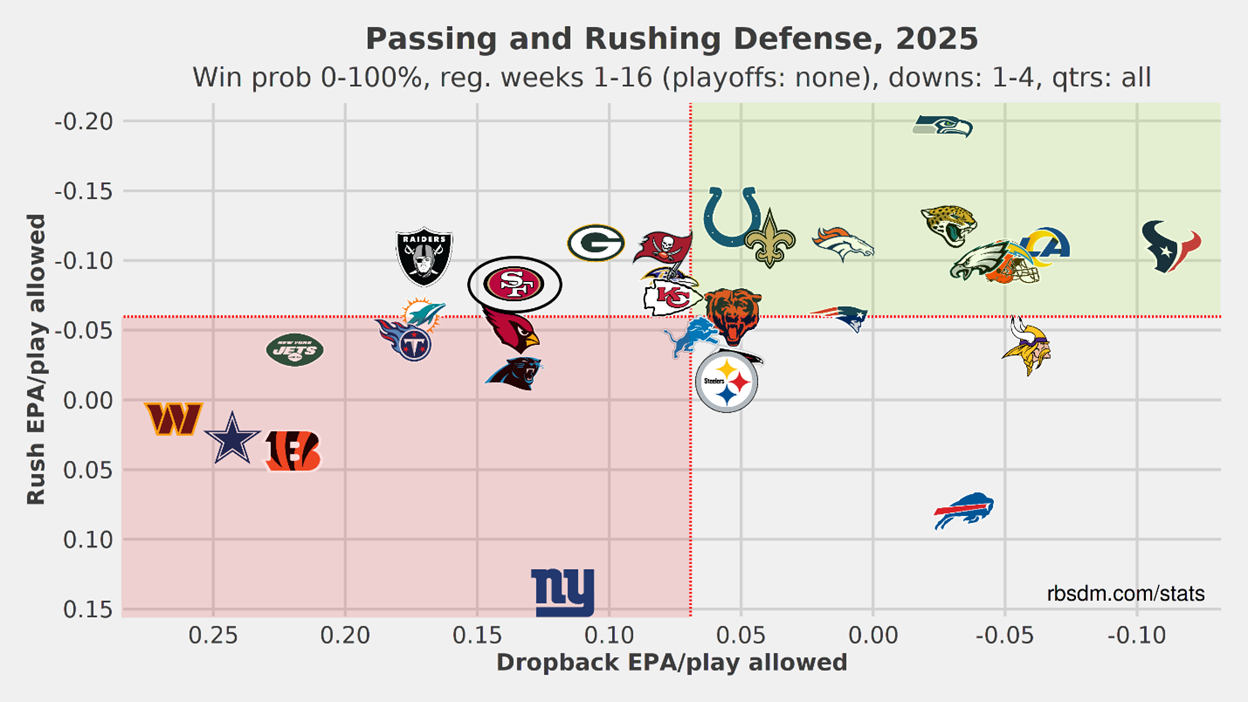
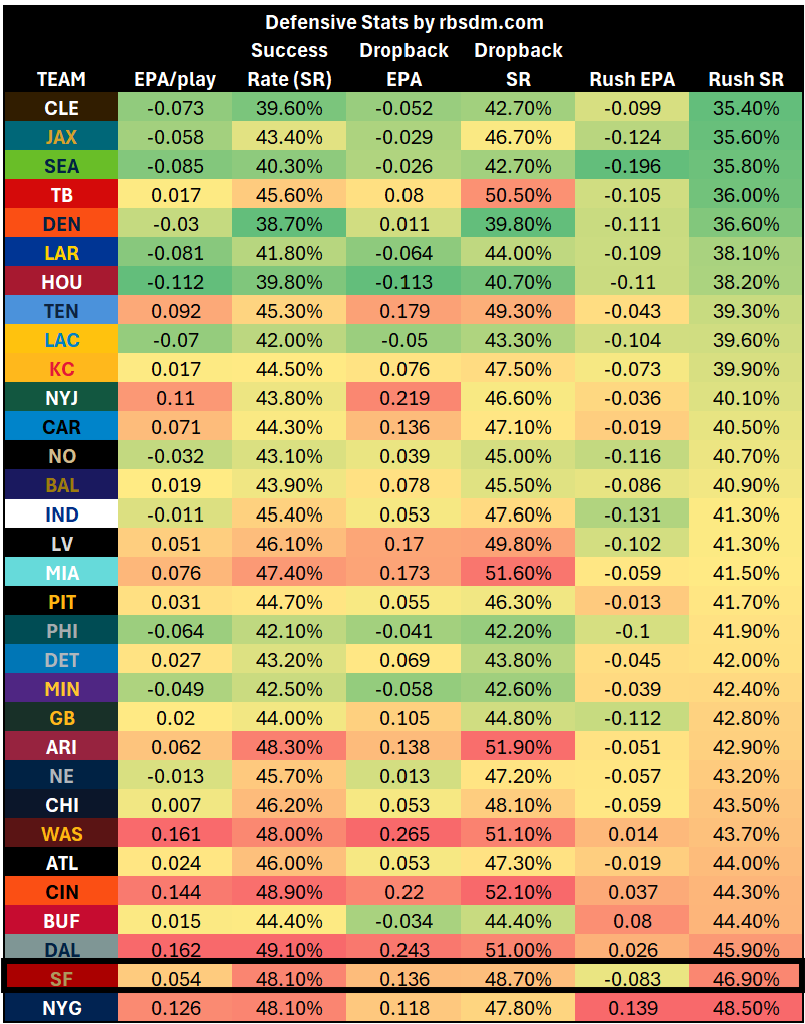
The 49ers are below average in dropback EPA and above average in rush EPA. It bears repeating that they are without their two most foundational defensive players, Warner and Bosa.
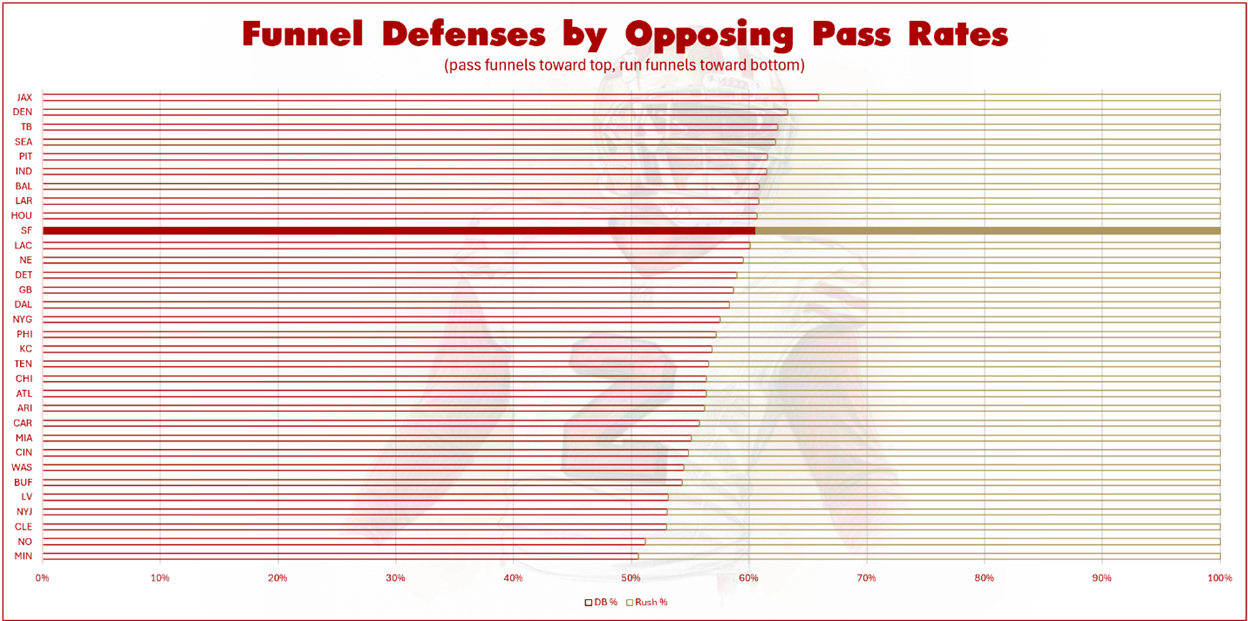
They have faced an opposing pass rate of 60.6% (10th), so they are a very slight pass funnel.
The 49ers rank 23rd in EPA per play allowed and 28th in defensive success rate. They rank 24th in EPA per dropback allowed and defensive success rate on dropbacks.
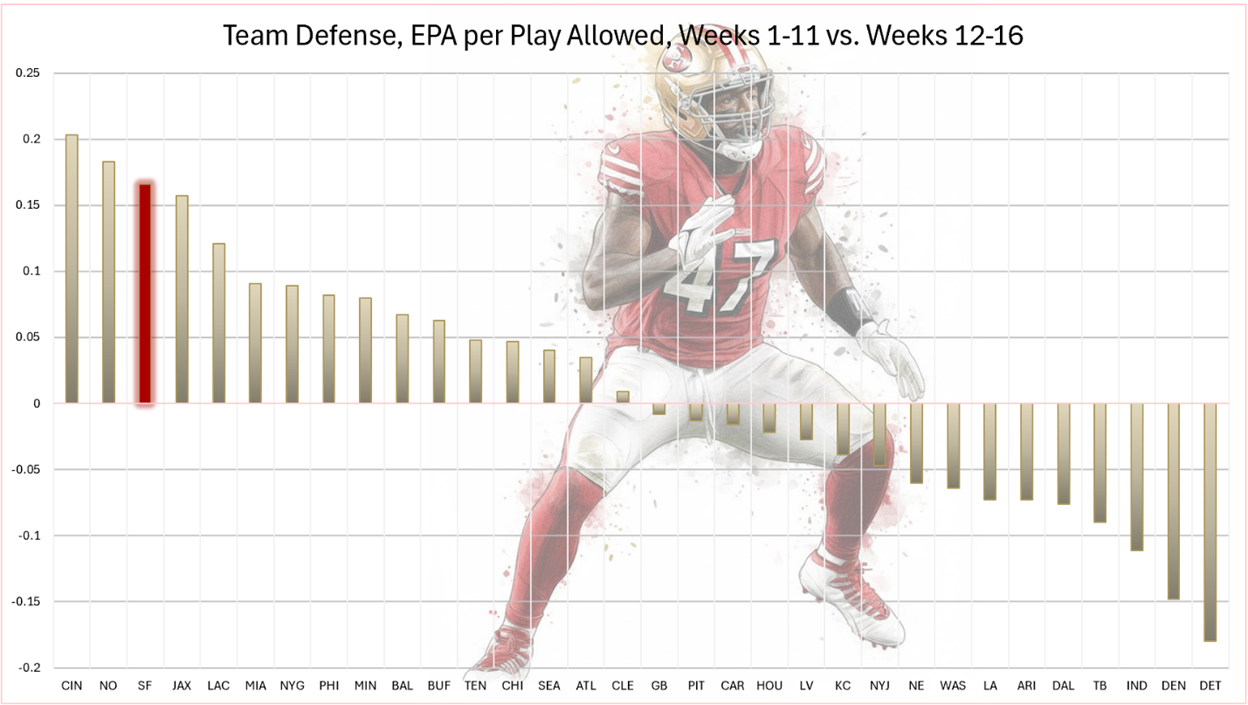
From Weeks 1-11, the 49ers ranked 25th in defensive EPA per play allowed; since Week 12, they rank ninth, indicating they are one of the most improved defenses in the league over the last month.
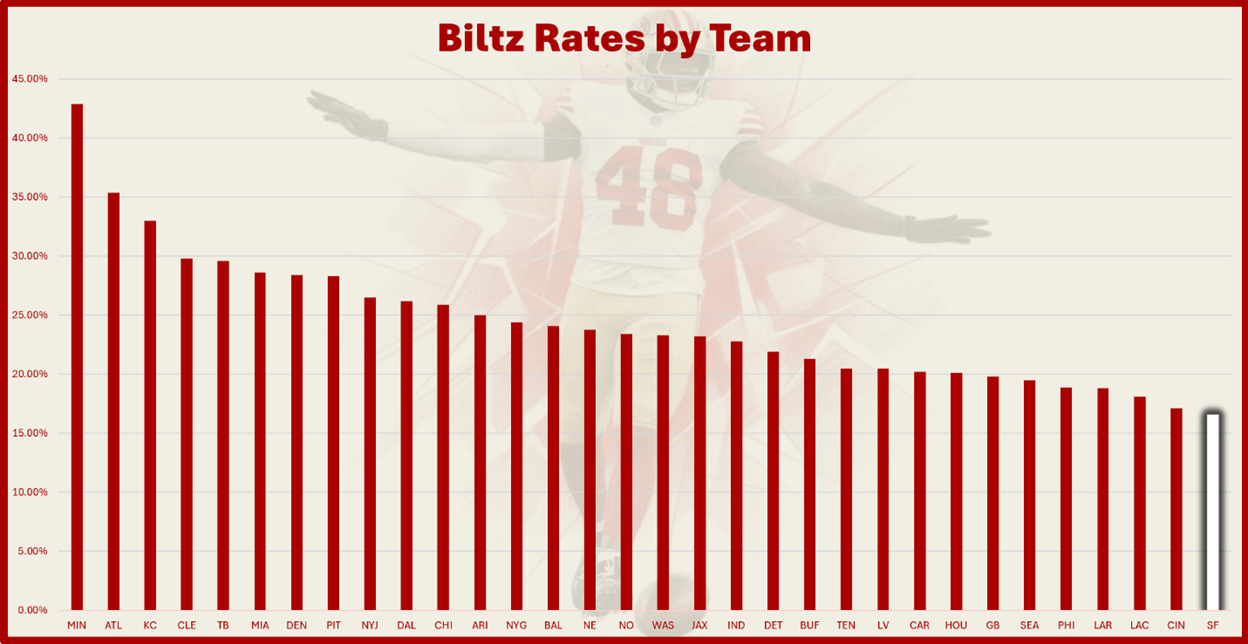
The 49ers have used zone defense at a rate of 77.2% (6th). They have used single-high safety at a rate of 54.3% (10th). Their primary alignments are Cover 3 (37.5%) and Cover 4 (22.0%). They blitz at a rate of 16.6% (32nd).
Fantasy Points’ coverage matchup tool assigns a zero-based matchup grade to each pass-catcher based on their opponent’s use of specific types and rates of coverage and how that pass-catcher performs against them. Positive numbers indicate a favorable matchup and negative numbers indicate an unfavorable one.
Based on this, the most favorable matchup (+10.0%) goes to Moore. Burden (+6.3%) and Zacchaeus (+1.1%) also show up with slightly favorable matchups. Loveland (-0.4%) and Kmet -2.2(%) have unfavorable ones.
PFF’s matchup tool is player-based, pitting the PFF ratings of individual players against each other for an expected number of plays based on historical tendencies and rating on a scale from great to poor.
Based on this tool, Loveland and Burden’s matchups grade out as good, while Moore’s and Kmet’s grade out as poor.
The Bears’ offense allows a pressure rate over expected (PrROE) of .0.69% (4th). The 49ers’ defense generates a PrROE of -3.67% (32nd). This should be decidedly lopsided in favor of the Bears’ offensive pass blocking group.
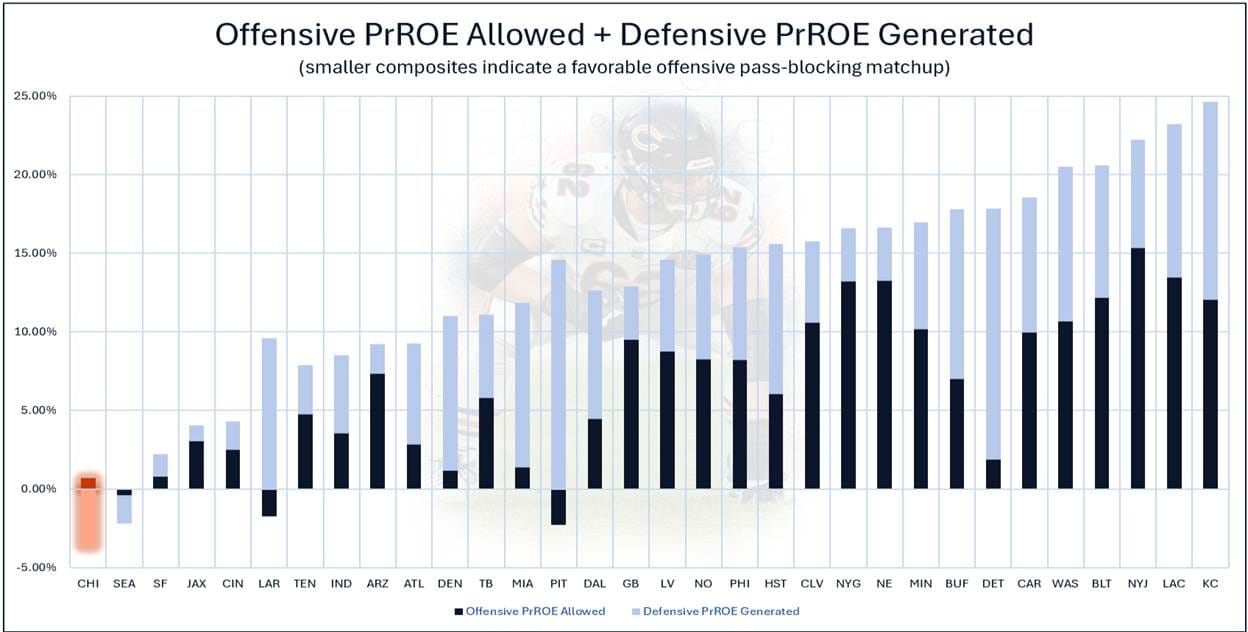
The Bears may be without RT Darnell Wright, who has been ill (as many Bears have been). He will likely be close to a game-time decision.
The Bears’ offense generates 2.48 adjusted yards before contact per attempt (adj. YBC/Att, 6th). The 49ers’ defense allows 2.22 adj. YBC/Att (19th). In run blocking, the advantage again goes to the Bears when they are on offense.
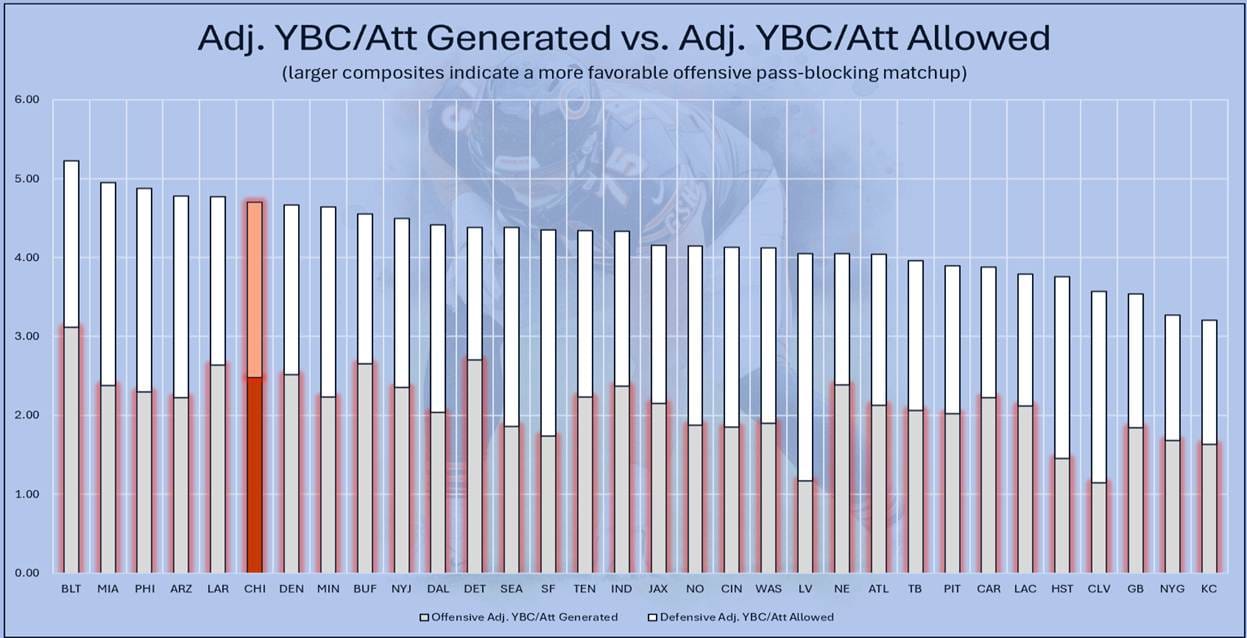
The Bears rank sixth in offensive EPA per rush and second in offensive success rate on rushes.
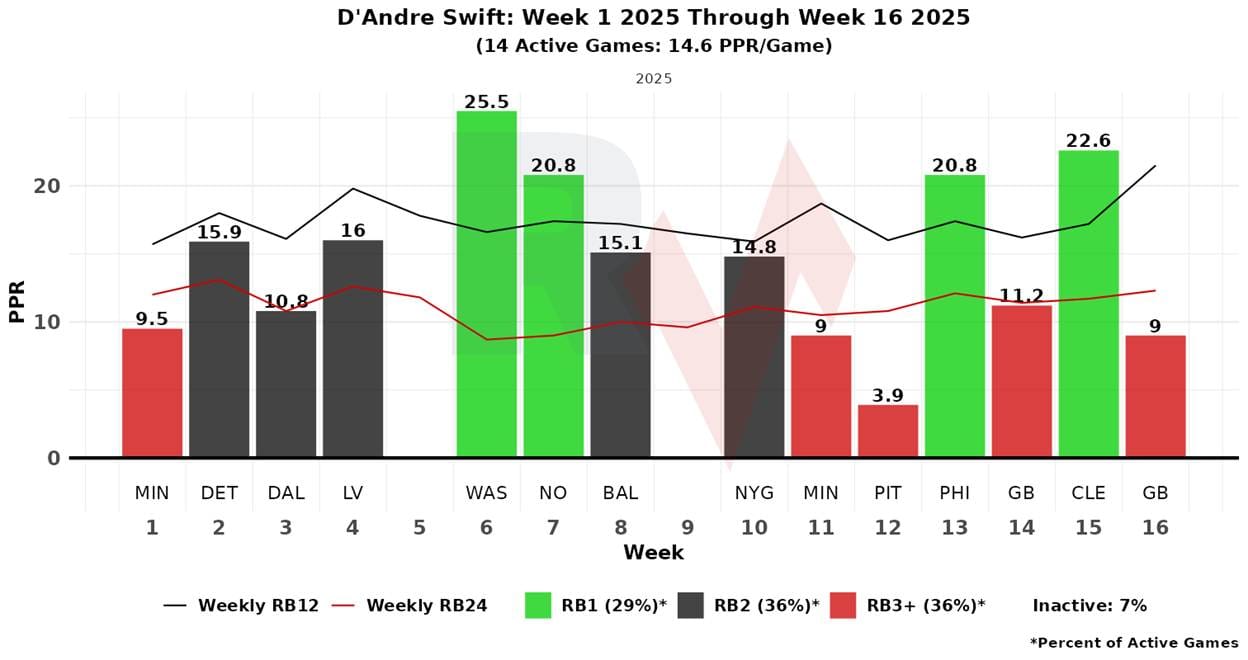
The Bears, who came into the week with 465 team rush attempts (2nd), run a committee backfield with RBs D’Andre Swift and Kyle Monangai. Swift has a slight edge in snap share, target share, and percentage of team rush attempts. Together, they account for 51% of the Bears’ total team opportunities, split almost evenly.

Swift has been an RB1 four times this year, with four single-digit PPR games.
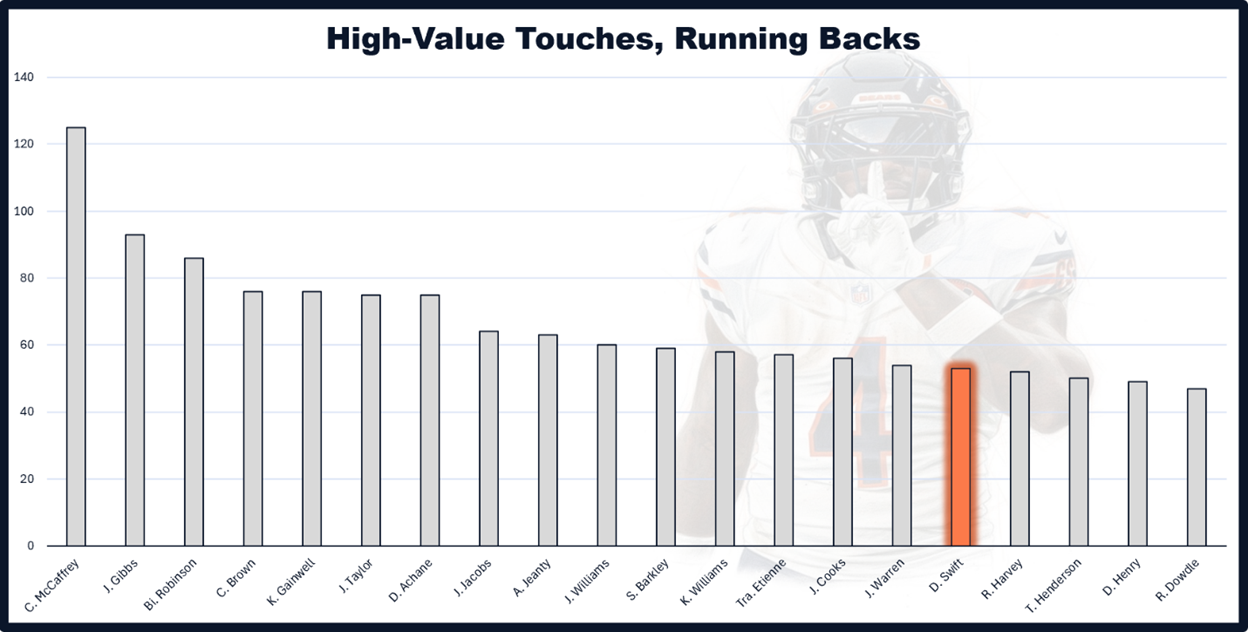
The reason Swift outpaces Monangai in fantasy football, despite relative evenness, is that he gets more high-value touches (HVTs, green zone carries + targets).
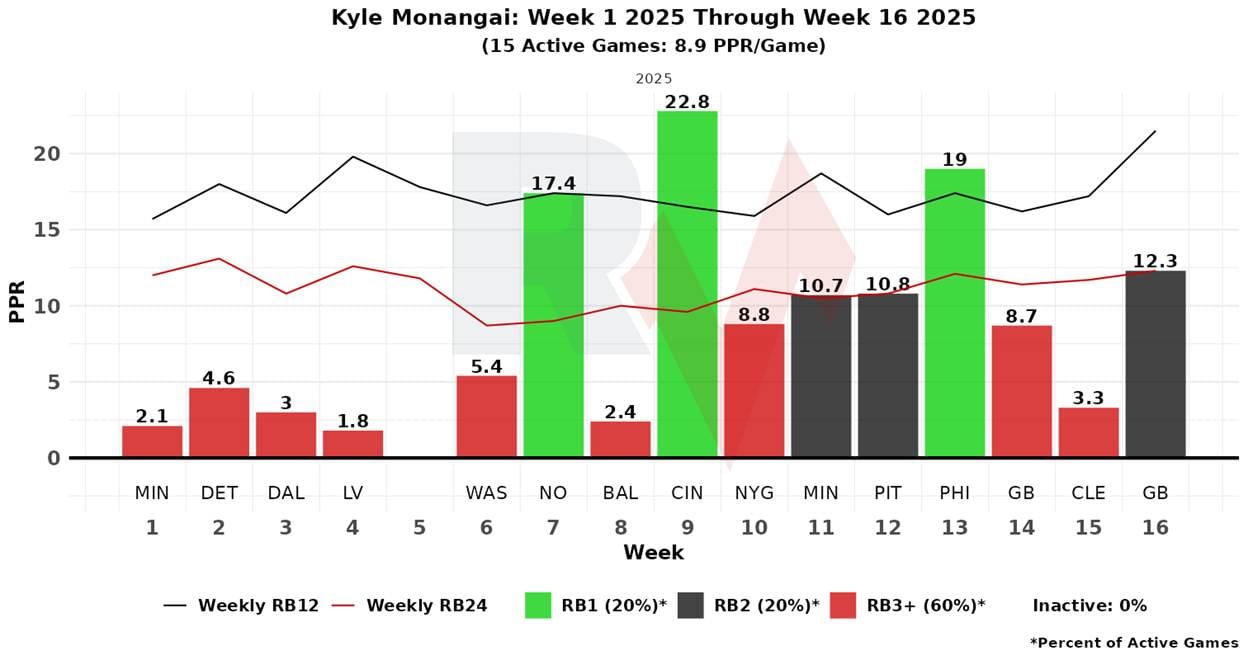
But Monangai is undoubtedly a viable flex. He is somewhat TD dependent, but there are worse offenses we could anchor ourselves to for that. He has been an RB1 three times himself, all coming after the team’s Week 5 bye. He has been in double-digits three additional times.
The 49ers rank 15th in EPA per rush allowed and 31st in defensive success rate on rushes.
RBs facing the Niners rank 20th in PPR points scored over their last five games.