
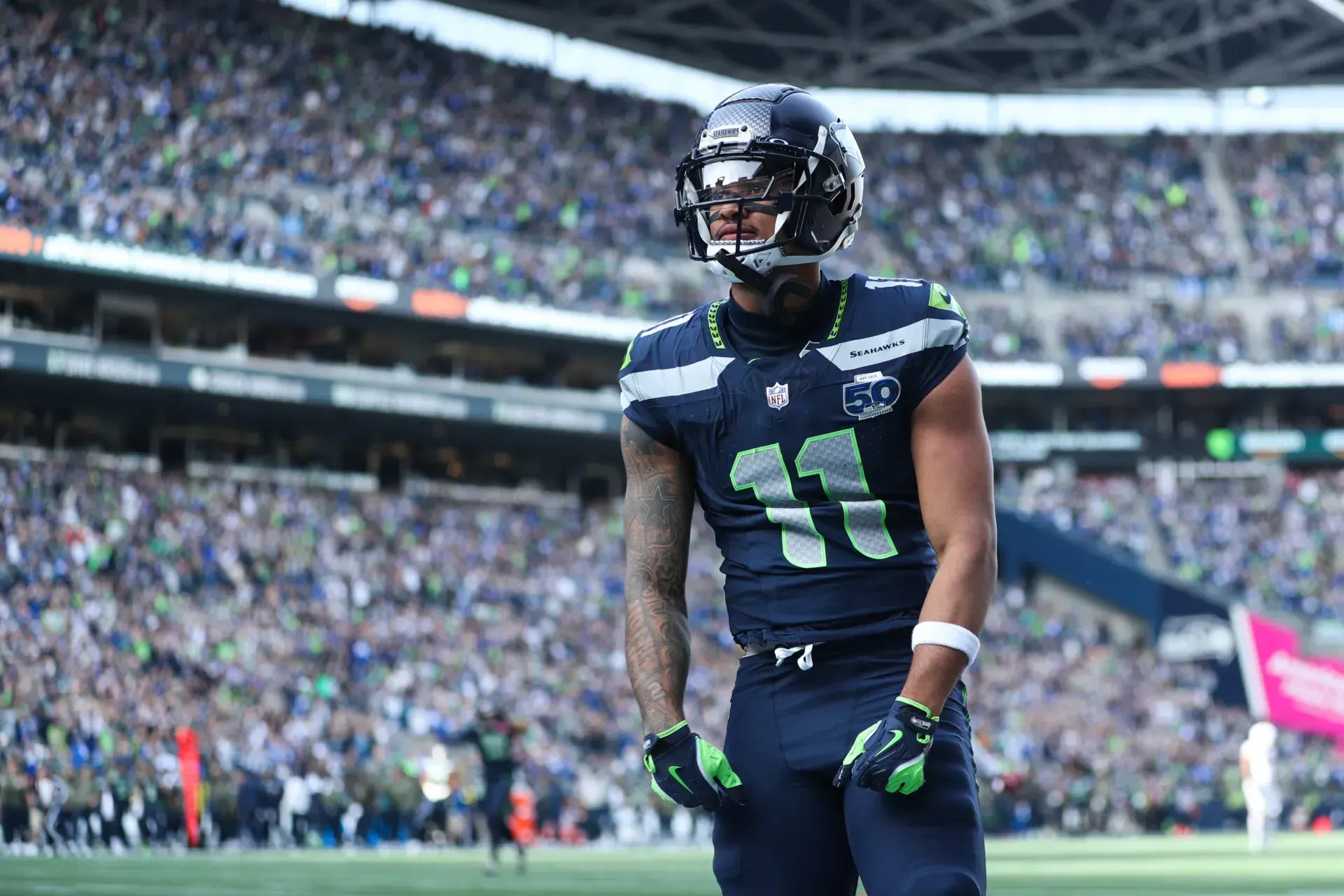
Quick Slant: TNF - Old Ties, Modern Consequences

Mat Irby’s Quick Slant
From 1977 through 2001, the Denver Broncos and Seattle Seahawks were divisional rivals, sharing the AFC West and meeting twice annually for 25 seasons. That's 50 regular-season games, an extraordinary number for two franchises separated by a thousand miles of mountains, desert, forests, and lonely, winding stretches of highway.
Back then, Denver usually got the better of the arrangement. The Orange Crush of the ’70s gave way to John Elway and his Three Amigos in the ’80s, when the Broncos made three Super Bowl appearances and suffered three rather comprehensive beatings. It took Mike Shanahan, Terrell Davis, and another decade for Elway to finally collect his two rings.
Seattle had considerably less to celebrate then, reaching the AFC Championship Game in 1983, but otherwise spending much of their time playing bridesmaid in their own division.
Then, in 2002, the NFL realigned. Seattle was shipped to the NFC West, and after 25 years of seeing each other twice a year, there was immediate silence. Over time, the Broncos and Seahawks became little more than acquaintances.
Each has won at least one Super Bowl since the breakup. Seattle's first, interestingly enough, came against Denver.
Super Bowl XLVIII was supposed to be Peyton Manning's second coronation. He'd thrown 55 TDs and led Denver to an NFL-record 606 points. They arrived in New Jersey with an offense that had spent four months doing practically whatever it had pleased.
Twelve seconds in, Manning was chasing a football into his own end zone. By the time Bruno Mars was smacking a snare near the 50-yard line (the most underrated Super Bowl halftime show of all time; I’ll die on that hill), Seattle led 22–0. In case anyone still entertained a comeback, Percy Harvin called game on the opening kickoff of the second half. Pete Carroll's Legion of Boom ground the Broncos into glue, laughing through most of a whopping 43–8 beatdown. For a franchise that had spent so many years looking up at Denver, it was quite a way to settle an old account.
The Broncos added one of their own a few short years later with a physically withering Manning – still as cerebral and studied as a five-star general – doing just enough to get by, while Von Miller and DeMarcus Ware, possibly the best set of bookends in NFL history, wrought war upon Cam Newton’s Panthers.
Seattle and Denver have met only occasionally since, most recently in Week 1 of 2024, when HC Mike Macdonald earned his first victory as Seattle's HC against Sean Payton's Broncos. Last season, they nearly met again in a Super Bowl. Denver came within a game of joining the Twelves, despite losing QB Bo Nix to a broken ankle in the divisional round and subsequently falling to New England in a blizzard a week later. Seattle went on to rake in the chips a second time and now stands as the reigning/defending.
Entering 2026, both teams had designs on remaining in the upper crust. Instead, five weeks in, the teams are a combined 6-4, and their seasons feel like failure in some way.
And on Thursday, they'll even look like the teams that used to share a division: Denver donning orange jerseys and powder blue helmets; Seattle adorned in royal blue and silver, Kingdome colors.
It may be Throwback Thursday in Denver, but the stakes couldn’t be higher in the here and now. The winner stays firmly in the race. The loser tumbles to .500 and questions everything. Only in separating have these franchises written their most storied verses. The bookmark is now set to Thursday.
GAME ENVIRONMENT
Seattle Seahawks (-2.5) at Denver Broncos
Over/Under: 40.5
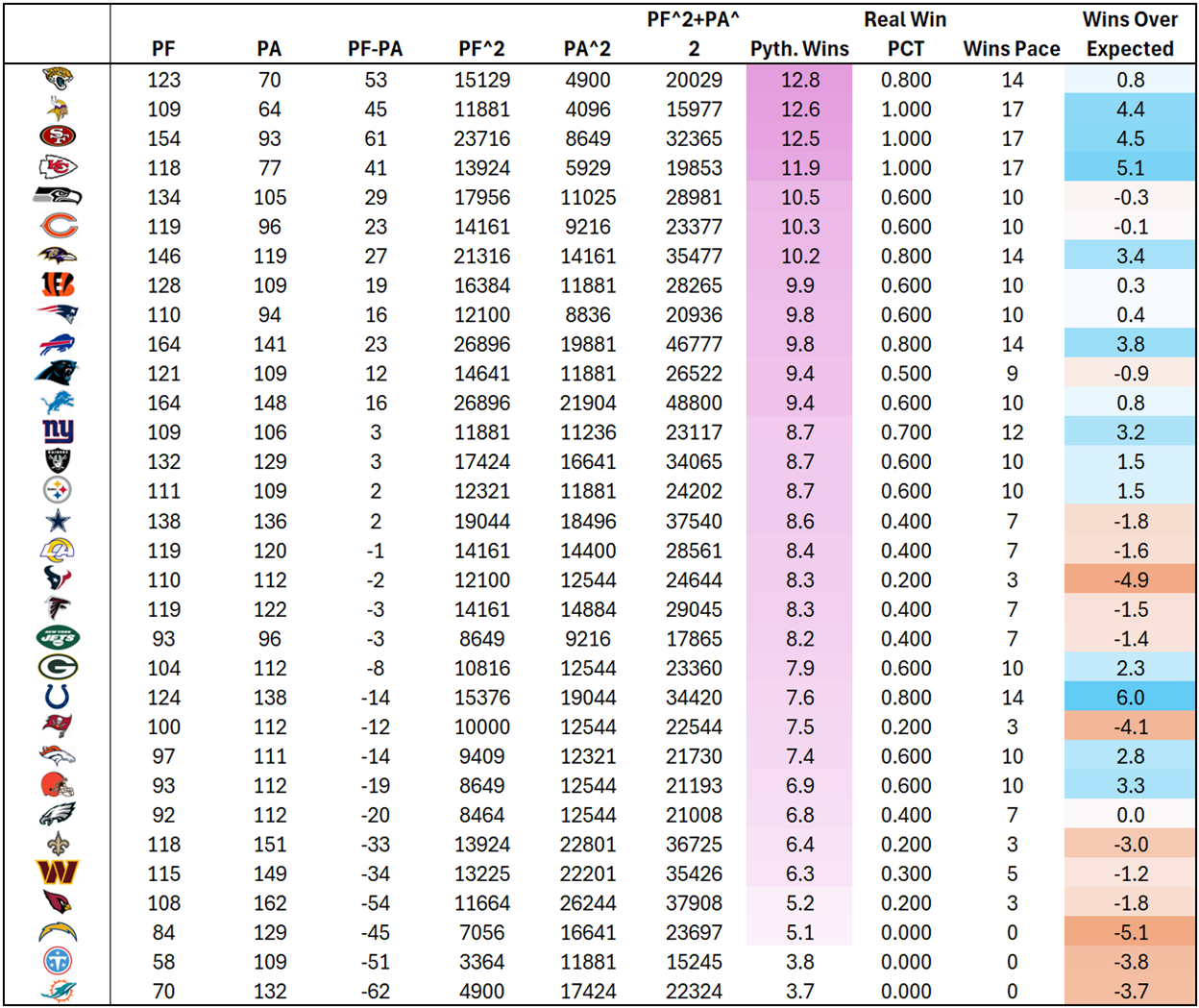
The Seahawks and Broncos are close in the standings at 3-2, but Seattle has performed significantly better by Pythagorean Wins, ranking fifth (10.5) compared to Denver's 24ᵗʰ (7.4). Both teams still rank in the top 10 in Super Bowl odds according to FanDuel Sportsbook.
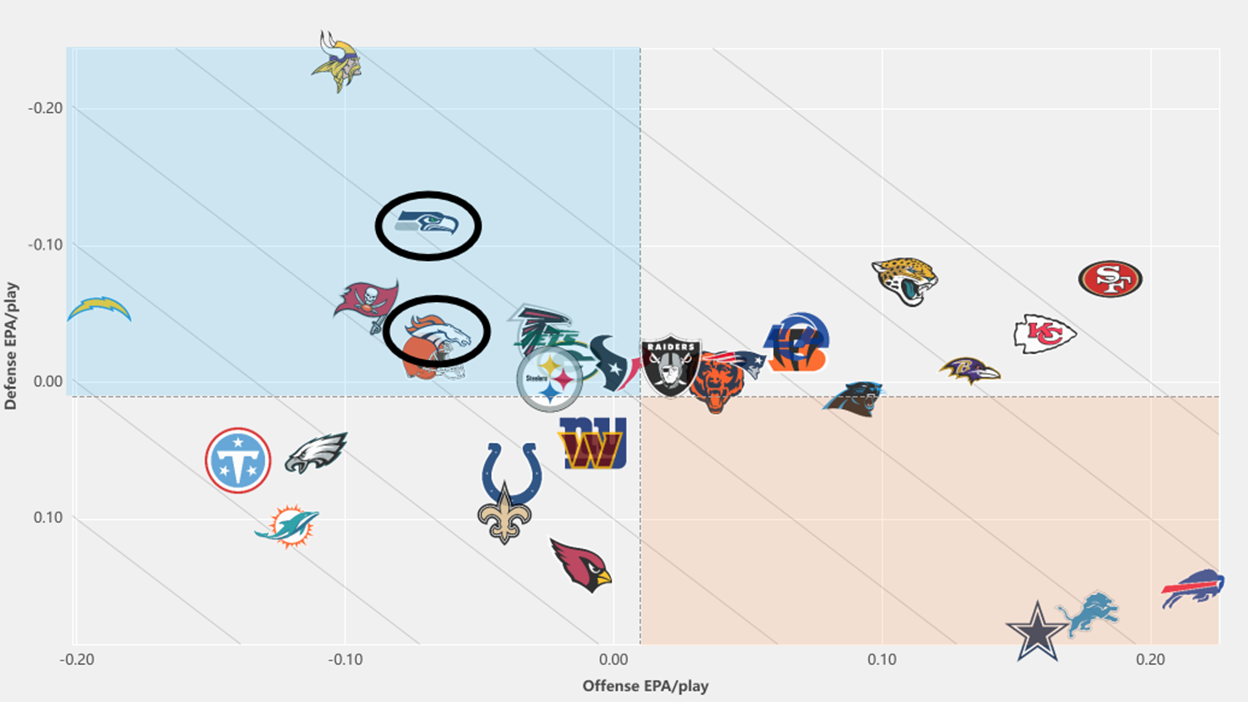
Each has been below average in offensive EPA per play, but above average in defensive EPA per play allowed. Seattle has been particularly good defensively, ranking among the top five teams. Denver is also good defensively, though they are bloodied and battered heading in.
This places both teams in the quadrant that is generally least productive for fantasy, with inefficient offenses and strong defenses, offering support for a low over/under. Seattle has the better overall profile, but neither team enters Thursday with an especially favorable offensive environment.
Both teams run at an uninspiring pace in neutral scripts, with the Seahawks taking 29.2 seconds per snap (21ˢᵗ) and the Broncos 28.5 (15ᵗʰ). Seattle manages 60 plays per 60 minutes (T-21ˢᵗ), while Denver manages 58 (T-27ᵗʰ).
Weather: Thursday's game will be played outdoors at Empower Field at Mile High in Denver. Temperatures should be around 50–54°F at kickoff, falling into the mid-40s by the end of the game. Winds are forecast around 6–10 mph, with little precipitation expected during the game. Weather should not be a significant fantasy concern.
Seahawks Key Injuries: RB Zach Charbonnet (knee) has been ruled out and remains on PUP while recovering from a torn ACL. RB Jadarian Price (chest) is also on IR, leaving Seattle without its top two RBs. Starting LB Drake Thomas (ankle) has been ruled out, while starting DT Leonard Williams (ankle) was limited throughout the week but carries no game designation. WR Jaxon Smith-Njigba (ankle) progressed from limited participation Monday and Tuesday to a full practice Wednesday and has been cleared to play. Starting G Beau Stephens (shoulder) also practiced fully on Wednesday and carries no designation.
Broncos Key Injuries: Starting CB Patrick Surtain II (ankle) and S Talanoa Hufanga (ankle) have been ruled out, leaving Denver significantly depleted in the secondary. Starting CB Riley Moss (ribs) is questionable after practicing on a limited basis all week. Starting G Ben Powers (biceps), S Brandon Jones (foot), and DE Sai'vion Jones (shoulder) practiced fully on Wednesday and carry no game designations. WR Pat Bryant (ankle) and RB Jonah Coleman (ankle) remain on IR. Starting ED Jonathon Cooper remains on the Commissioner's Exempt List and is ineligible to play. Denver has no significant weekly injury designations among its active fantasy-relevant players.
SEAHAWKS
Implied Team Total: 21.5
The Seahawks have been above average in EPA per dropback, but among the NFL's least efficient rushing offenses. Seattle's EPA per rush is approximately -0.28, compared to roughly +0.13 per dropback.
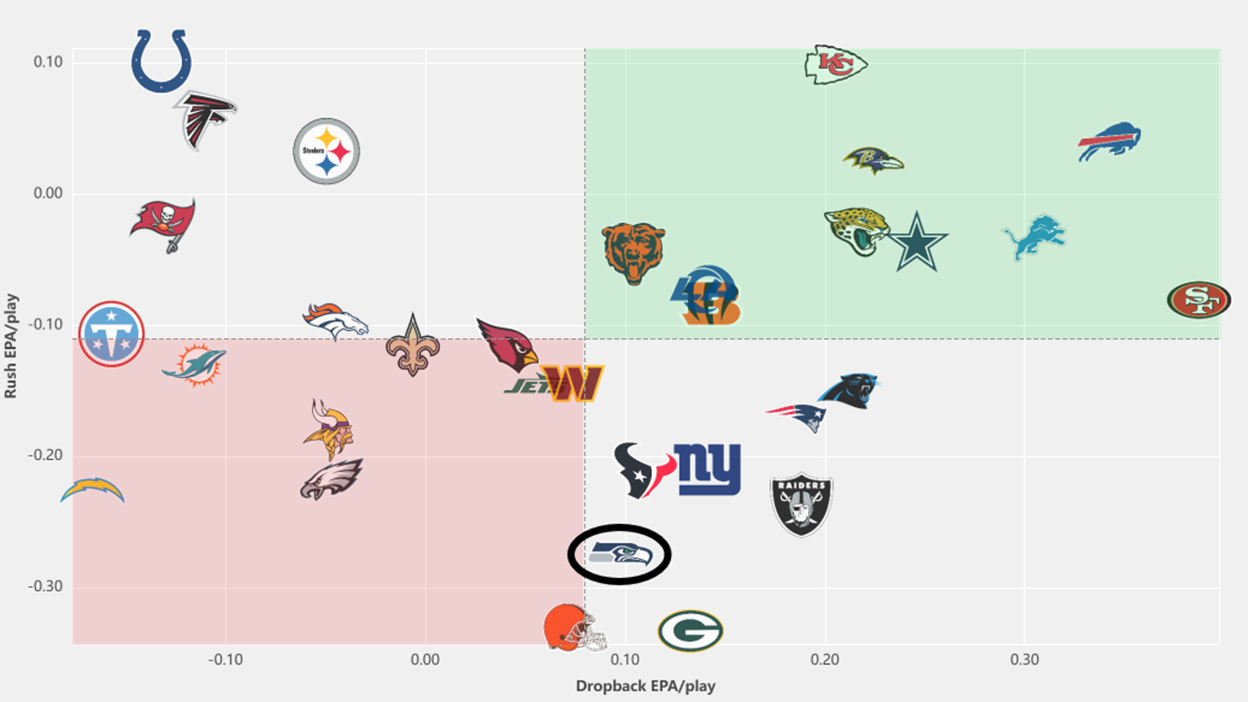
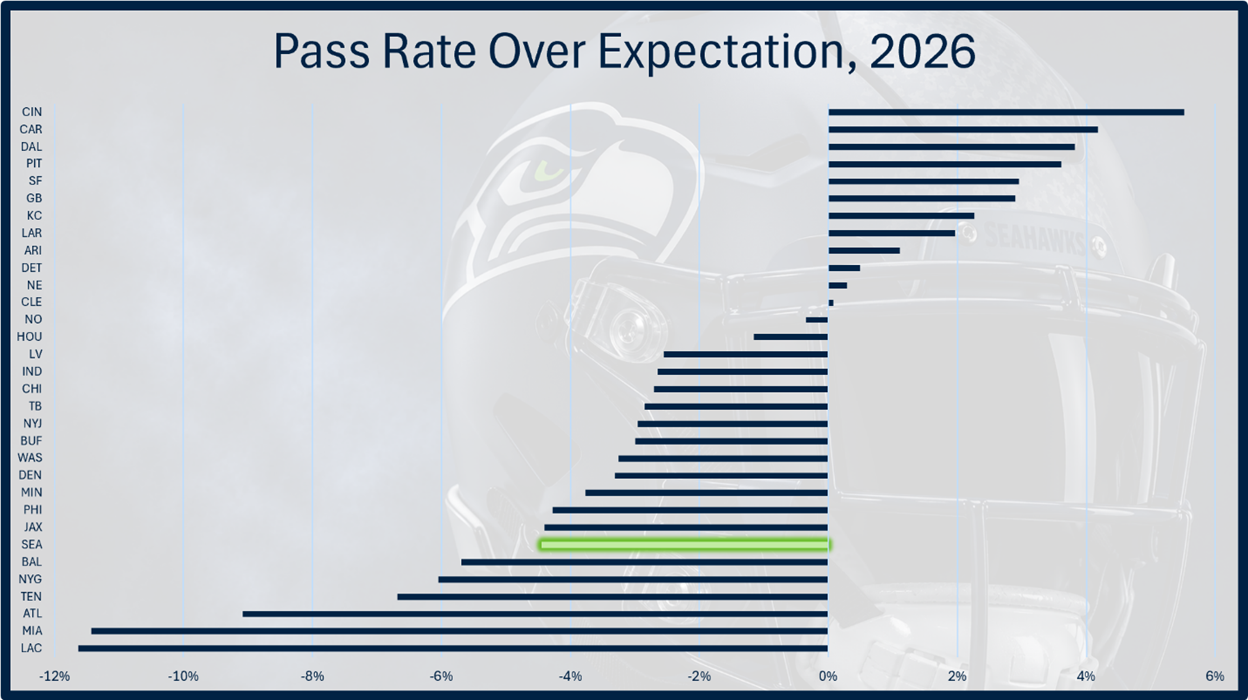
Despite their relative success through the air, the Seahawks have been one of the NFL's most run-heavy teams at approximately -4.5% PROE (27ᵗʰ). That tendency has been somewhat costly given their rushing inefficiency.
QB Sam Darnold has averaged only 27.5 dropbacks and 24.5 pass attempts per game, ranking 31ˢᵗ and 30ᵗʰ, respectively. His 188.8 passing YDs/G rank 24ᵗʰ, while his 1.75 passing TDs/G rank 14ᵗʰ.
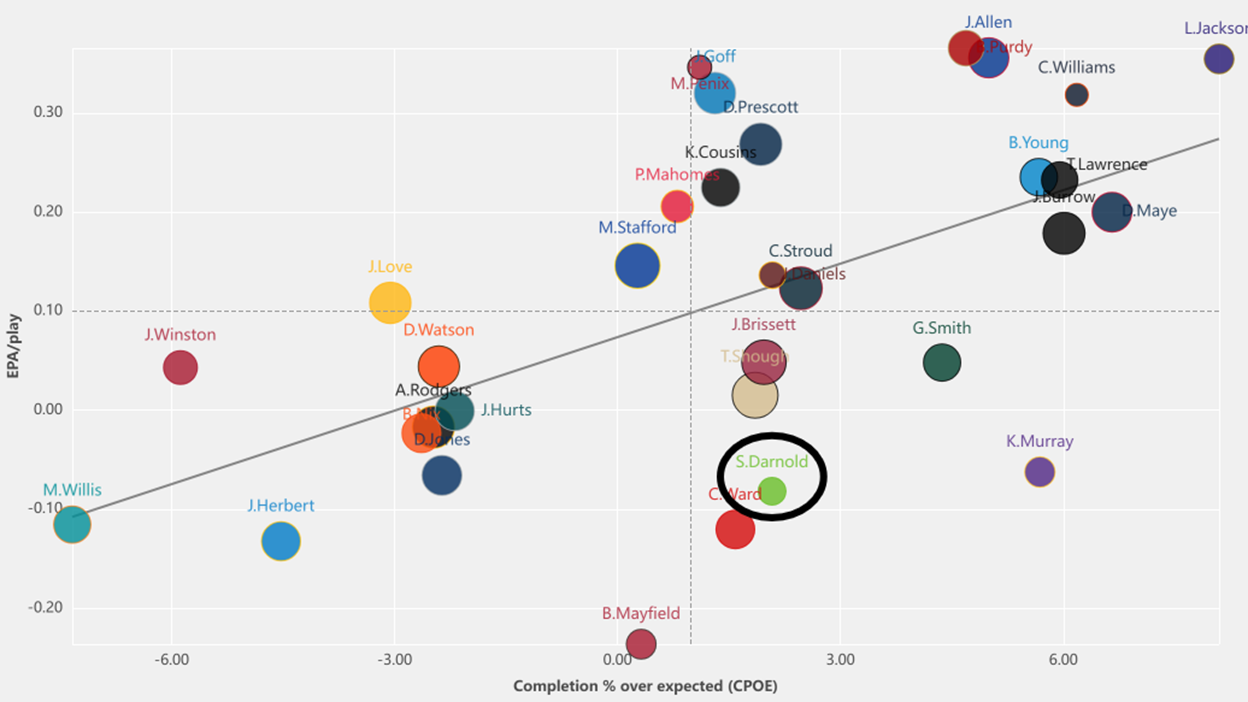
Darnold has been below average in EPA per play (-0.09), despite a CPOE of +2%. His passing production has been limited, not only by low volume, but also by a shallow aDOT of 7 yards (T-29ᵗʰ) and only 154.5 air YDs/G (30ᵗʰ).
Darnold offers little as a runner, averaging just 4 rushing YDs/G (27ᵗʰ). Only 2.92% of his fantasy production has come from rushing (27ᵗʰ).
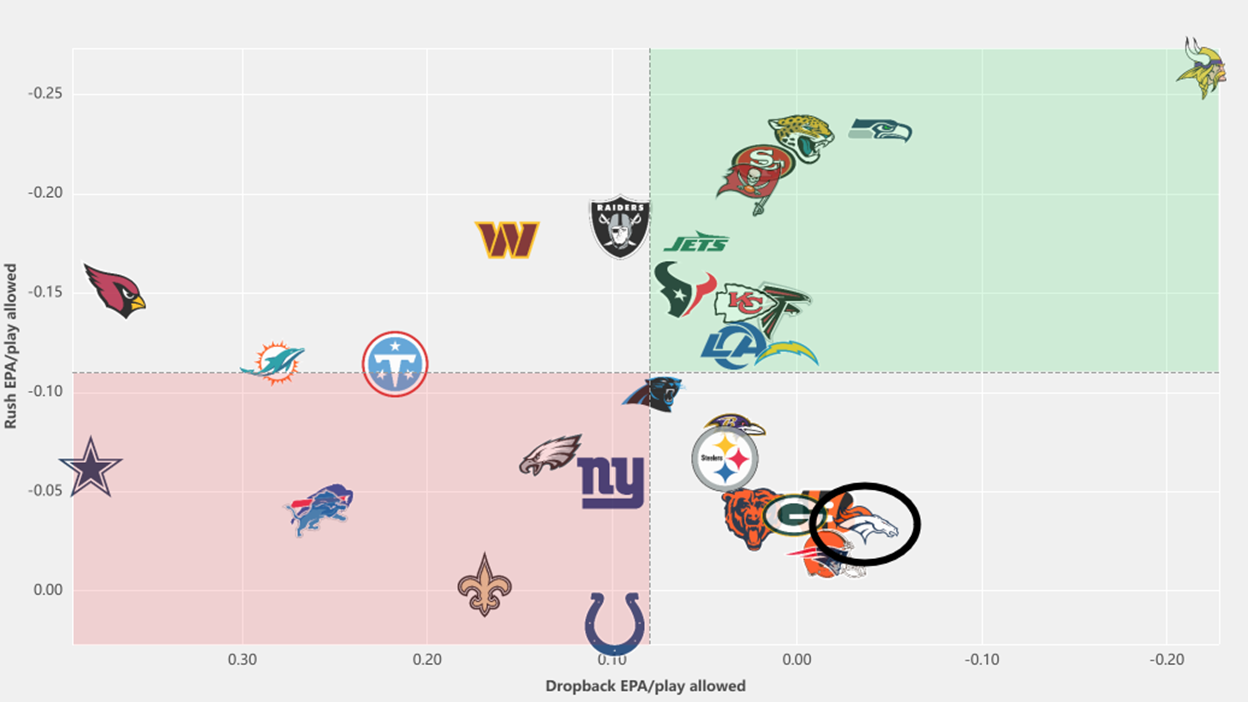
The Broncos have been better against the run than the pass, allowing approximately -0.04 EPA per rush and +0.02 EPA per dropback. Their pass defense has been slightly below average by EPA, although their overall defensive performance has been stronger than those numbers might suggest.
Denver will be without starting CB Patrick Surtain II and S Talanoa Hufanga, while CB Riley Moss is questionable. These are significant losses for a secondary that has otherwise been one of the team's strengths.
Like most teams, the Broncos use zone more often, but they play man 28.4% of the time. They use single-high safety on 49.5% of their plays, with Cover 3 their most common alignment (31.1%). Denver blitzes at a 33.2% rate. Opposing QBs have averaged just 0.32 FP per dropback against Denver's zone coverage, compared to 0.63 against man. They've also been considerably more productive against two-high looks (0.54 FP/DB) than single-high (0.31).
Darnold’s matchup against Denver's coverage tendencies ranks fifteenth in Fantasy Points’ QB Coverage Matchup tool, with an expected 0.39 FP/DB against the Broncos' defensive alignments. PFF’s player-based matchup tool grades the assignment as fair.
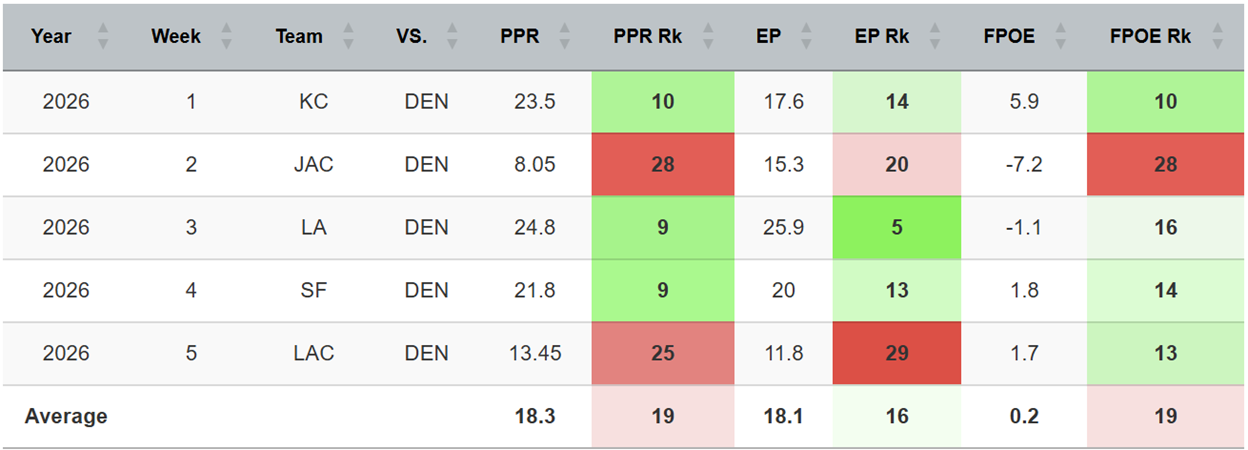
From a fantasy standpoint, the Broncos have been a relatively neutral matchup for QBs, who have averaged 18.3 FP/G (19ᵗʰ) through five games. This is driven by 18.1 EP/G (16ᵗʰ) and just +0.2 FPOE/G (19ᵗʰ), suggesting that neither opportunity nor efficiency has been especially favorable for opposing QBs.
With significant injuries throughout Denver's secondary, there is far less to fear.
Denver has been somewhat more vulnerable against the pass than the run by efficiency, but the difference is modest. Their defensive profile doesn't suggest a pass funnel, though Seattle's rushing inefficiency may encourage more passing with the right script.
Seattle's passing offense has run overwhelmingly through WR Jaxon Smith-Njigba, who has 50 targets through five games, compared to 20 for TE AJ Barner, 18 for WR Rashid Shaheed, and 15 for WR Cooper Kupp.
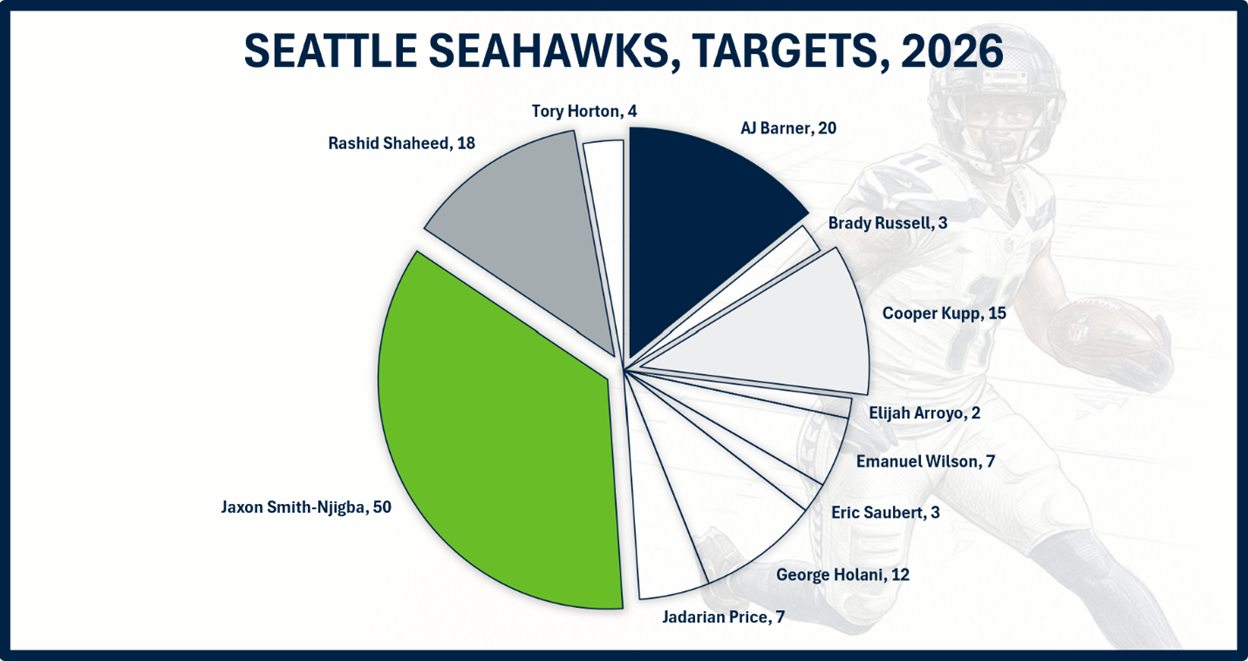
Smith-Njigba has been extraordinary, leading all WRs in receiving yards per game (116.6), YPRR (3.94, 2ⁿᵈ), TPRR (35%, 2ⁿᵈ), first-read target share (43.1%, 1ˢᵗ), and PFF receiving grade (92.4, 1ˢᵗ). He's also second in air-yard share (53.3%), third in rec 1Ds/G (5.6), and fourth in YAC/G (16). His 34.53% target share and 85.2% route participation (13ᵗʰ) illustrate how much of Seattle's passing offense belongs to him.
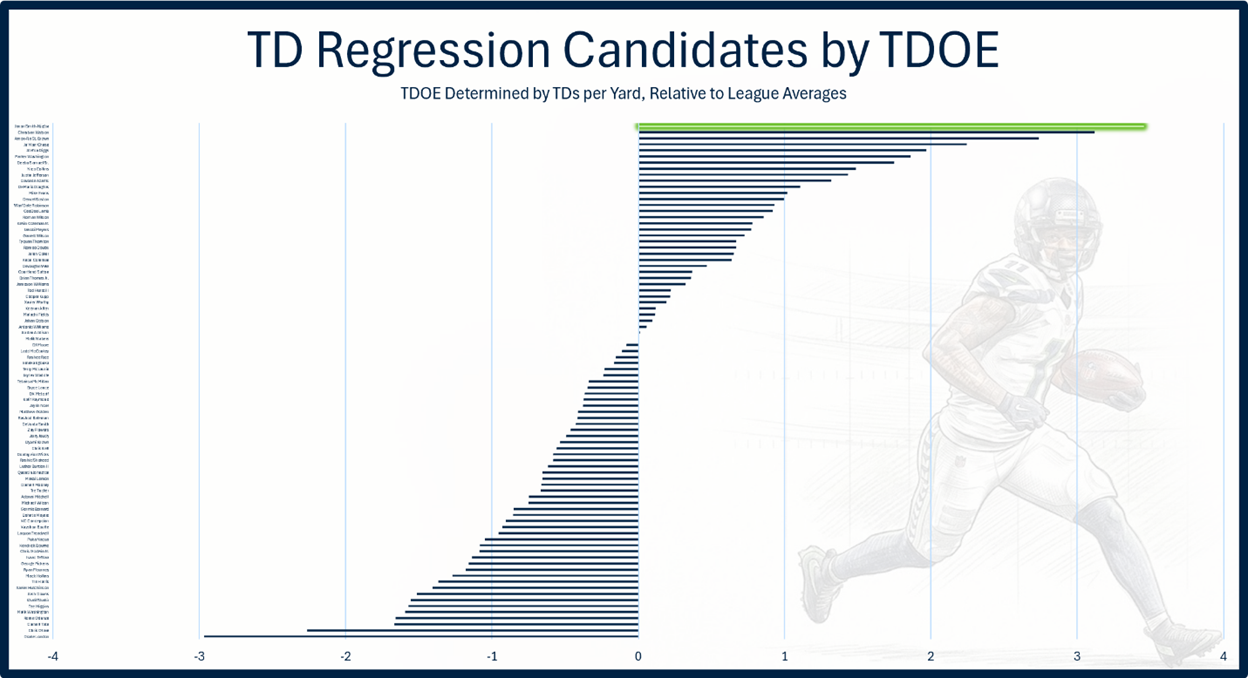
The only obvious concern is TD regression. Smith-Njigba has scored seven receiving TDs on 583 yards, and his TDOE ranks among the league's highest. However, his 18 EP/G (3ʳᵈ) and 9.96 FPOE/G (1ˢᵗ) suggest that even a considerable reduction in TD efficiency would leave him with elite fantasy production.
Without Surtain, Hafunga, and possibly Moss, the matchup is tantalizing for JSN.
Kupp and Shaheed have been considerably less productive. Kupp has 15 targets, 11 receptions, and 129 yards, with 1.08 YPRR (T-71ˢᵗ) and a 14% TPRR (T-74ᵗʰ). His 66.7% route participation is only 52ⁿᵈ among WRs. Shaheed has 18 targets, nine receptions, and 96 yards, with 0.92 YPRR (79ᵗʰ) and a 61.1% route participation (68ᵗʰ). Neither has earned enough opportunity to inspire much fantasy confidence.
Barner is second on the team with 20 targets, but he's produced only 12 receptions and 122 yards. His 70.4% route participation (10ᵗʰ among TEs) and 25.2 routes/G (17ᵗʰ) give him a reasonable opportunity floor, although his 18% TPRR (T-25ᵗʰ), 0.97 YPRR (35ᵗʰ), and -2.62 receiving FPOE/G (42ⁿᵈ) have been disappointing. He's a volume-dependent fantasy option rather than an especially productive one.
According to the Fantasy Points' Coverage Matchup tool, Smith-Njigba has a favorable matchup against Denver. According to the PFF tool, Smith-Njigba has a great assignment against Denver's secondary. PFF grades Kupp's matchup as fair, Shaheed's as poor, and Barner's as fair.
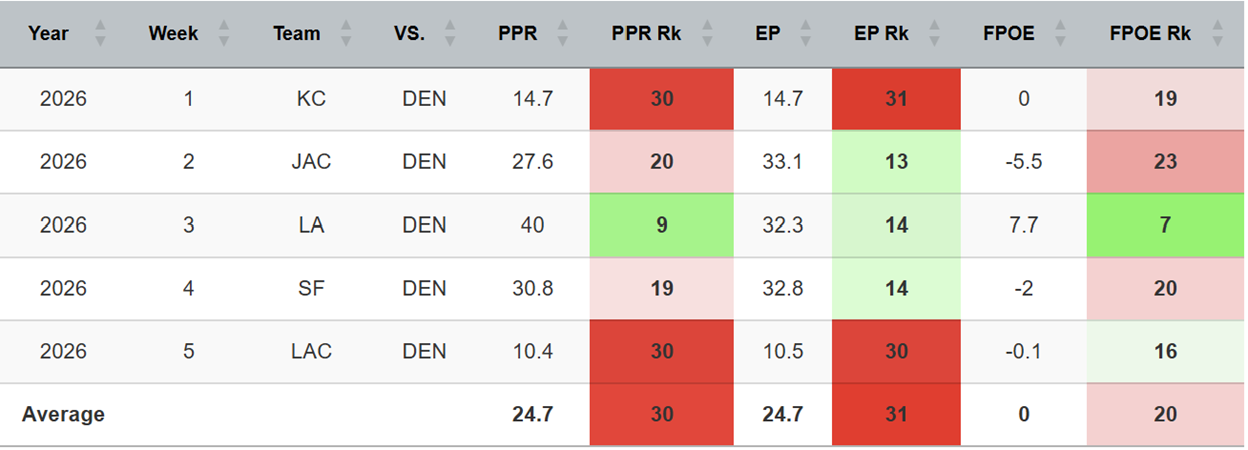
Over their first five games, the Broncos have allowed 24.7 PPR/G to WRs (30ᵗʰ), with 24.7 EP/G (31ˢᵗ) and essentially zero FPOE/G (20ᵗʰ). Denver has generally limited WR opportunity rather than allowing particularly poor efficiency.
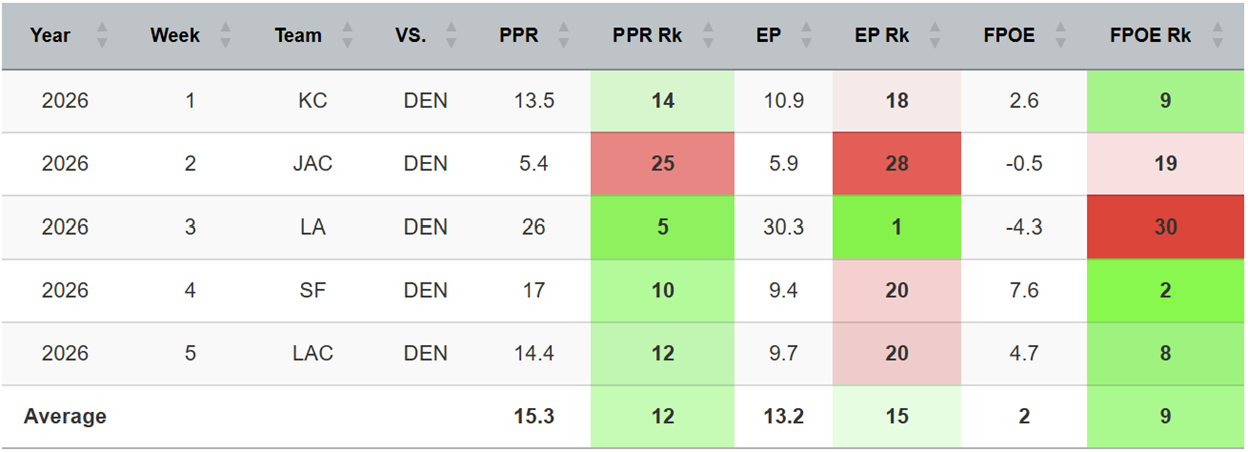
Denver has been more generous to TEs, allowing 15.3 PPR/G (12ᵗʰ), 13.2 EP/G (15ᵗʰ), and 2.0 FPOE/G (9ᵗʰ). Barner's matchup isn't prohibitive, but his limited efficiency and relatively modest target share make him difficult to trust beyond the lower-end TE options.
Smith-Njigba is the only Seattle pass-catcher with a consistently strong fantasy profile. Kupp and Shaheed are difficult to recommend on their current usage, while Barner remains a serviceable TE option whose route participation has yet to translate into significant production.
In the trenches, there is no discernible matchup between Seattle’s offensive line and Denver’s front seven, either in pass-blocking or run-blocking.
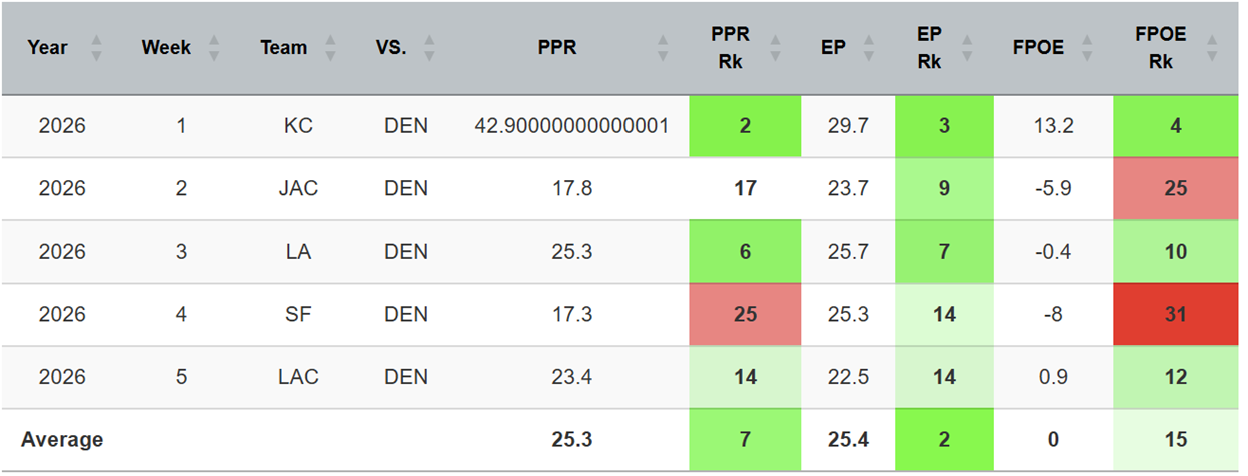
Denver has allowed 25.3 PPR/G to RBs (7ᵗʰ) through five weeks, but the production has been almost entirely volume-driven. Opposing RBs have averaged 25.4 EP/G (2ⁿᵈ), with essentially no FPOE. Kansas City had the biggest Week 1 performance, scoring 42.9 PPR against Denver, including 13.2 FPOE. The Broncos have otherwise held RBs below expectations in three of their last four games.
Without Charbonnet or Price, Seattle's backfield has been divided among RBs Emanuel Wilson and George Holani. Wilson leads the group with 73 carries for 251 yards (3.44 YPC) and two TDs. He has averaged 10.4 FP/G against 12.6 XFP/G, and his 39.7% rushing success rate hasn’t been especially encouraging.
Denver's recent results suggest that Seattle should have opportunities to run, but those opportunities haven't consistently translated into above-expectation production for opposing RBs.